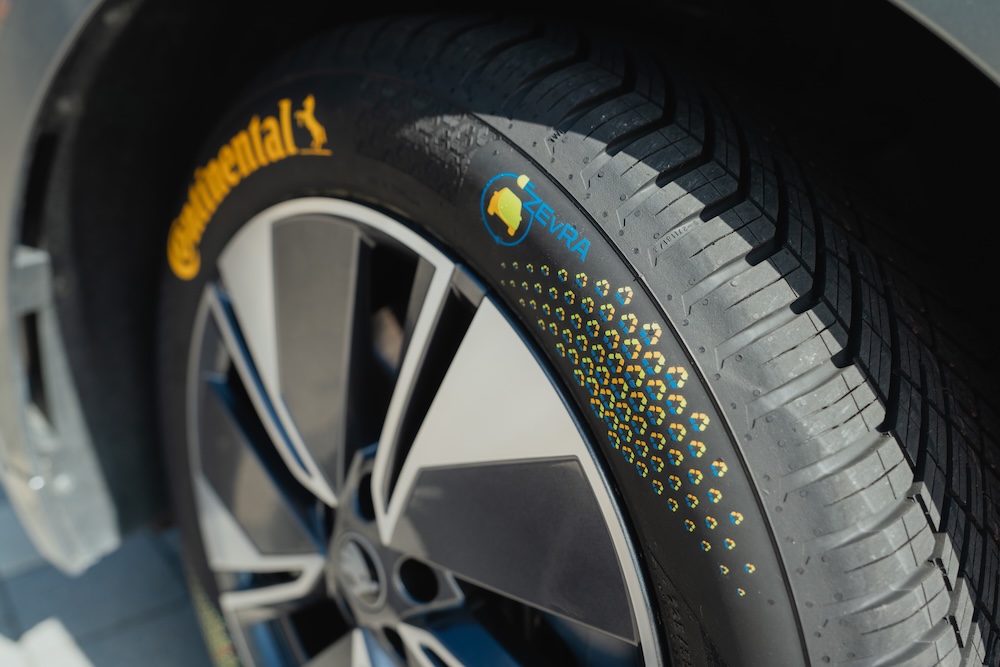
Continental has developed a concept tyre made from around 43% recycled material as part of the EU-funded ZEvRA project, focused on increasing circularity across the electric vehicle value chain
“Circular materials can help save resources and energy while reducing greenhouse gas emissions. They are key to making mobility more sustainable,” says Dr Andreas Topp, head of Platform Development and Industrialisation for passenger-car tyres at Continental. “We have extensive experience in developing high-performance materials from renewable and recycled sources. Our concept tyre shows what is technically possible today – while serving as a catalyst for the innovations of tomorrow,” he added.
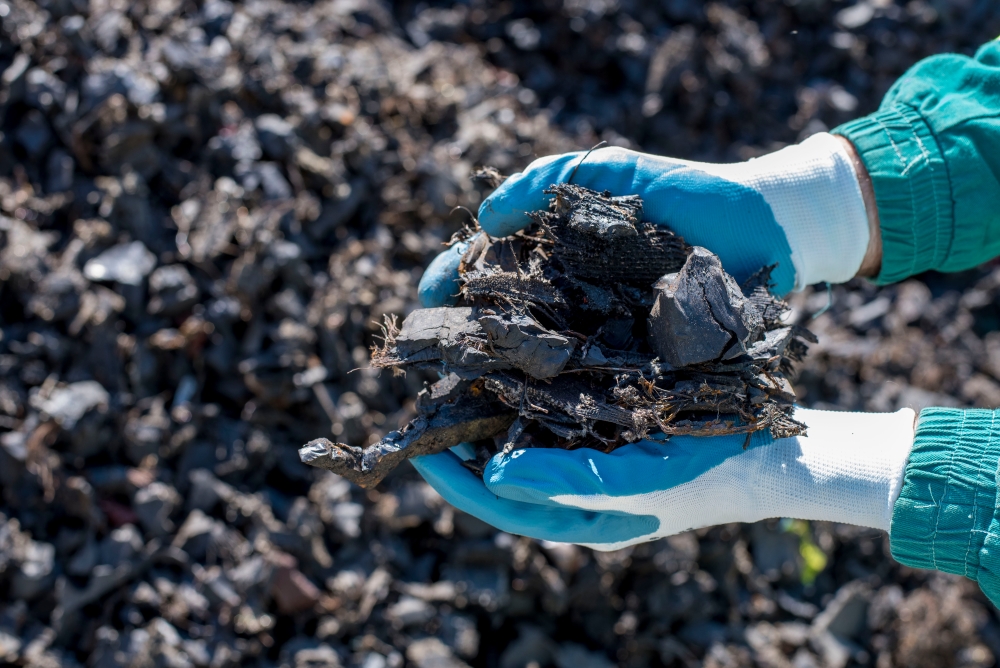
The ZEvRA (“Zero Emission Electric Vehicles Enabled by Harmonised Circularity” ) concept tyre incorporates recycled tall oil, steel, rubber from end-of-life tyres and polyester fibres made from recycled PET bottles, as well as recovered carbon black (rCB) produced through tyre pyrolysis, as well as an alternative silica material made using foundry sand residues.
rCB has been employed at the Continental Korbach site in all newly produced solid rubber tyres since 2023, primarily fitted on forklift trucks. Additionally, sand, which forms as a residue in foundries, such as rSand, is used in a recycling process to manufacture an alternative silica variant.
“The next step is to establish innovative recycling technologies on an industrial scale and set up closed material flows. This is essential to accelerate the transformation to a resource- and climate-friendly circular economy,” explains Jorge Almeida, head of Sustainability for Continental’s Tires group sector.
The Continental concept tyre contains around 13% renewable raw materials and a further 25% mass-balance-certified materials. Combined with the recycled content, more than 80% of the materials used come from recycled, renewable or mass-balance-certified sources.
Continental has been increasing its use of alternative materials in production. Since 2022, selected passenger-car tyres have used polyester made from recycled PET bottles, while the UltraContact NXT, launched in 2023, contains up to 65% renewable, recycled and mass-balance-certified materials.