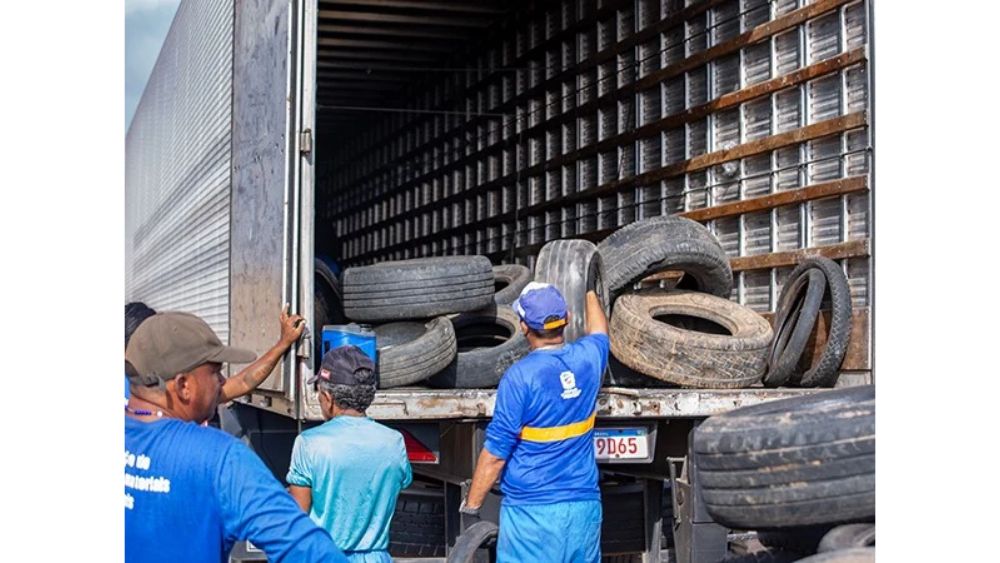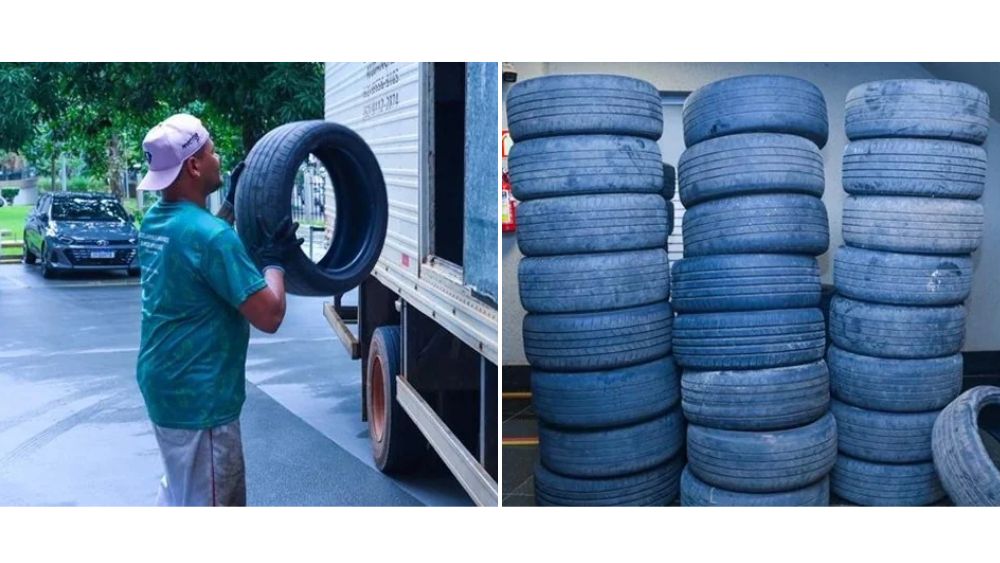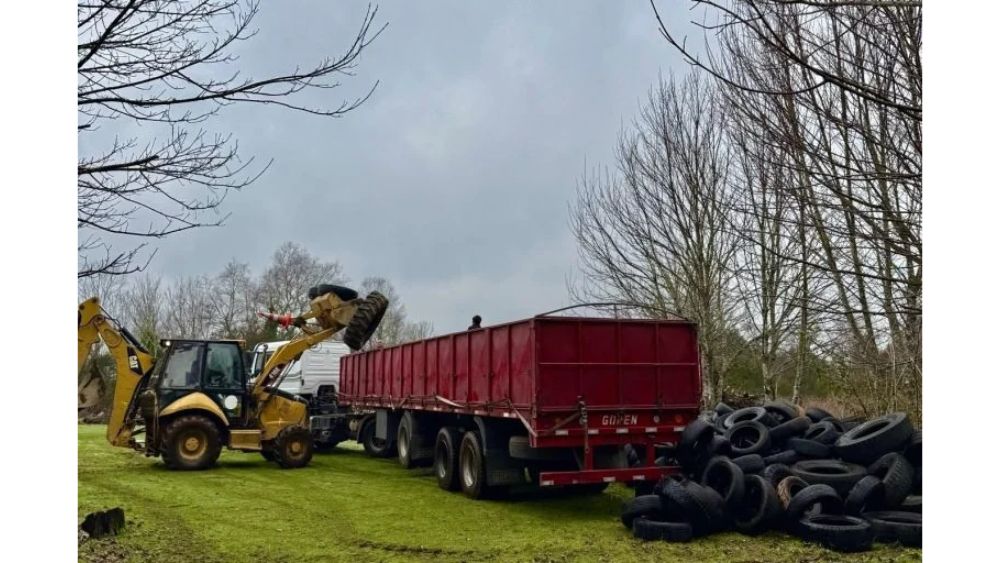
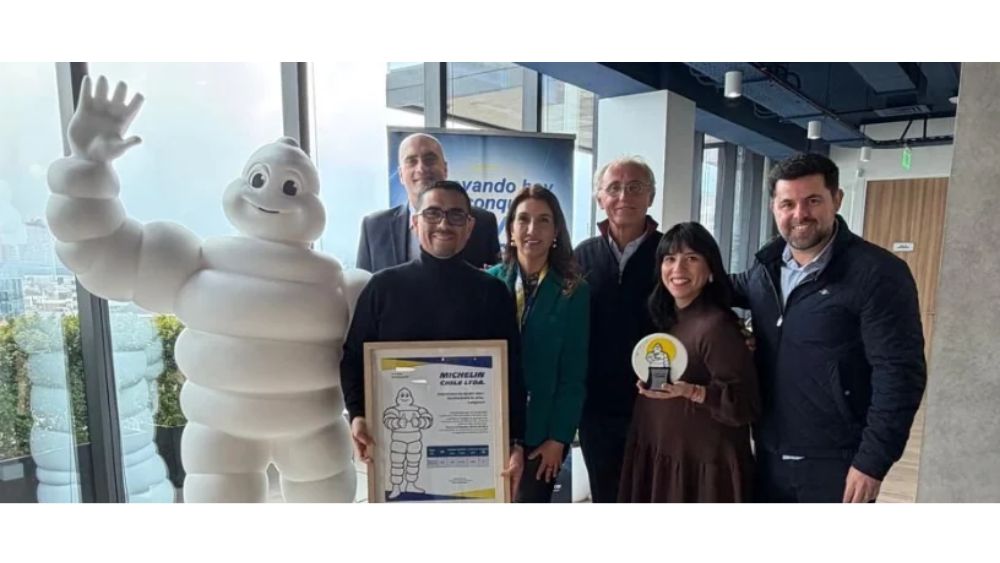
Minera Los Pelambres, a mining company from Chile, has received recognition from Michelin NFU for its management of the recycling and recovery of end-of-life mining tyres, after significantly exceeding the targets set under Chile’s Extended Producer Responsibility (EPR) Law
The mining sector in Chile is a significant part of the country’s economy, contributing to around 12% of its GDP and reaching 57% of the country’s total exports. However, it also contributes to the annual ELT generation, with around 50,000 tonnes of the total 140,000 tonnes that Chile generates coming from the mining sector.
Between 2023 and 2026, Minera Los Pelambres achieved an average of 240% of the required target in terms of the number of tyres recycled and 260% by weight, according to Jaime Barrios Espinoza, Senior Engineer in the Mine Management Department and lead of the process.
“During the first four years of operation, from 2023 to 2026, the law required us to manage 25% of the total end-of-life tyres generated during that period. Pelambres doubled that target. Over the four years, we achieved an average of 240% compliance by number of tyres and 260% by tonnage,” Barrios explained.
The initiative is primarily managed by the Mine Management Department, which is responsible for handling the end-of-life tyres generated by the operation and ensuring their treatment complies with environmental regulations.
The tyres are currently sent to Arrigoni and Polambiente, facilities located in San Francisco de Mostazal and the municipality of Lampa, respectively. A new plant under construction in Illapel will soon join the processing network, adding capacity in the Choapa Province and creating opportunities for local suppliers.
According to Barrios, the company’s operating model, approved by its Environment Management Department, includes both pyrolysis and tyre shredding.
“Through pyrolysis, which is essentially the thermal decomposition of a tyre in the absence of oxygen, we obtain three by-products: carbon black, pyrolysis oil and green steel,” he said.
Mechanical processing, meanwhile, produces rubber material that can be used in a range of applications, including rubber flooring, asphalt shingles, rural roads made with concrete and rubber mixtures, synthetic turf sports pitches and basketball court surfaces, Barrios explained.
Cristián Maluenda, Operational Risk Management Engineer in the Environment Management Department, said the results reflected the company’s commitment to exceeding statutory recycling targets.
“Since 2023, we have achieved compliance levels beyond those required by the regulations. This has been possible thanks to the work of the Mine team, which has done an outstanding job,” he said.
Maluenda also highlighted the cooperation with the companies responsible for processing the tyres, including an authorised waste management operator approved by Chile’s Ministry of the Environment. He said these partnerships had helped increase the company’s recycling volumes.
He added that the results represented progress for the Chilean mining industry in meeting environmental requirements. “We are one of the few companies in the Chilean mining sector to have achieved accelerated compliance with the EPR Law,” he concluded.