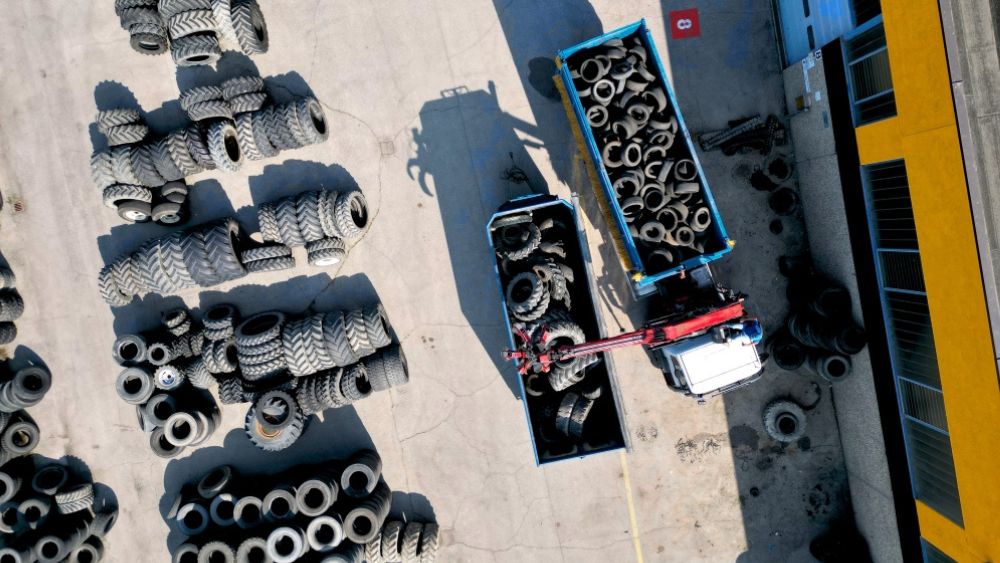
Ecopneus has published its 2025 Sustainability Report, showing a milestone year in which material recycling overtook energy recovery as the primary route for tyre waste in Italy
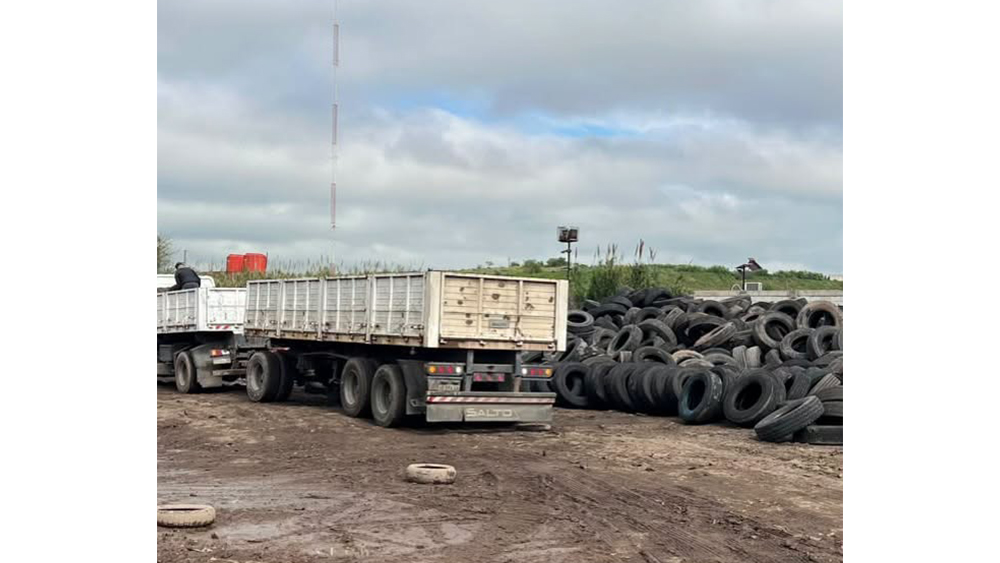
In 2025, Ecopneus collected more than 199,000 tonnes of end-of-life tyres, precisely 199,408 tonnes, around 124% of the statutory legal target and 23.57% above what was required, according to its 2025 Sustainability Report. Ecopneus achieved this through roughly 52,000 collection operations, responding to requests from over 20,300 generation points across all Italian provinces.
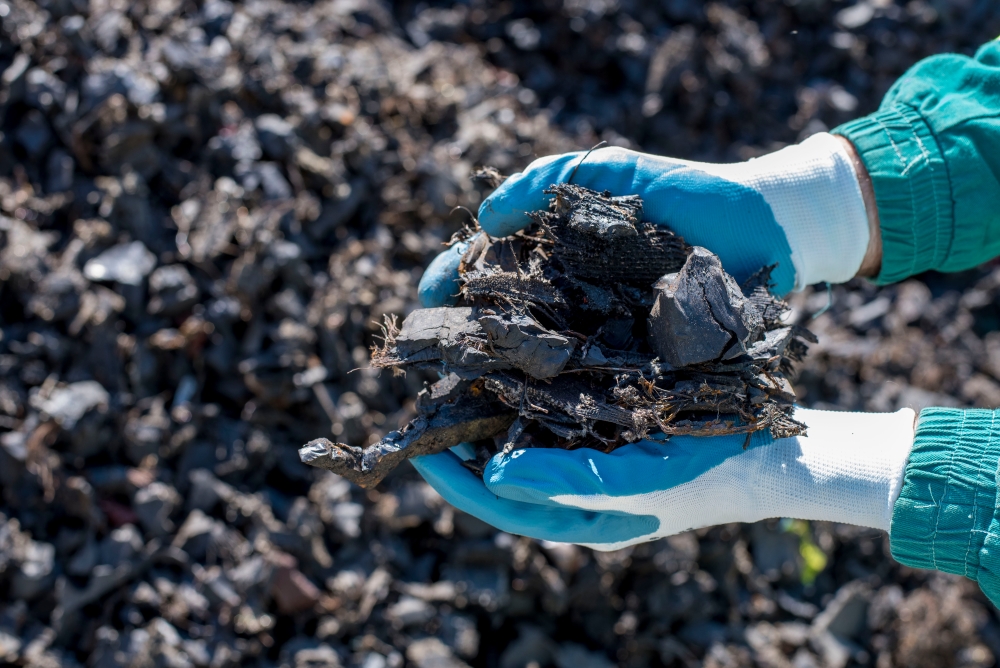
For the first time, material recovery accounted for the majority of ELT flows: 51%, against 49% sent for energy recovery. According to Ecopneus, this confirms the growing importance of recycling and the industrial valorisation of rubber over incineration for energy.
To quantify the supply chain’s environmental impact, Ecopneus commissioned a Life Cycle Assessment (LCA), certified by RINA, which was launched in 2025, with an update due in 2026. The study found that the benefits of material recovery substantially outweigh the impacts of collection and processing.
Managing more than 199,000 tonnes of ELTs in 2025 helped Italy to:
- Avoid 131,338 tonnes of CO₂ equivalent emissions, comparable to the annual absorption capacity of around 17.5 million trees
- Avoid the consumption of 1,204,249 MWh of non-renewable fossil resources, enough to heat over 14 million square metres of housing, or light a football stadium for more than 116,500 matches
- Reduce freshwater ecotoxicity and particulate matter emissions by displacing virgin polymers with recycled rubber
The report also shows a figure on the economic value of the system. By replacing imported raw materials, including virgin elastomers, polyurethane, petcoke and iron ore, with recycled ELT materials, Italy saved an estimated €69.7 million in 2025, of which €61.5 million came from recycled rubber alone.
The domestic market for Granular Vulcanised Rubber (GVR) continues to strengthen, with 81% of recycled material now staying in Italy, up from 77% in 2024. The sports sector remains the biggest driver, with Tyrefield® surfaces and synthetic turf infill together accounting for 71% of domestic GVR use, followed by acoustic insulation in construction and industrial applications (24.6%). Use in modified asphalt and bitumen is also rising, reaching 835 tonnes, boosted by the full rollout of Italy’s Minimum Environmental Criteria for roads (CAM Strade).
Giuseppina Carnimeo, General Manager of Ecopneus, said: “The 2025 Sustainability Report describes the evolution of a system that acts as a true enabler of a circular industrial supply chain. Collecting more than 199,000 tonnes of ELTs, significantly exceeding the legal target thanks to a widespread logistics network and daily commitment, provides the foundation for generating a measurable positive impact. The fact that material recovery now represents the largest share of ELT management demonstrates that the quality of our work delivers concrete environmental benefits. The approximately €70 million saved on raw material imports shows that ELT recycling represents a strategic resource for Italy’s economic resilience.”
The report also showcases Ecopneus’ ongoing research programmes, developed with universities and scientific partners:
- Infrastructure and modified asphalt: Building on established use on high-traffic motorways (including the A22 Autobrennero, A24 and A33 Asti-Cuneo), Ecopneus presented results from the EU-funded LIFE SNEAK project, which trialled low-noise road and tramway surfaces in dense urban areas, cutting rolling noise and vibration. This complements Ruconbar acoustic barriers, made from recycled rubber and concrete, used to mitigate noise along major transport routes.
- Motorcyclist safety: Working with Anas, Ecopneus trialled the D.s.m.U. Ecofriendly system, a continuous protective device made from ELT-derived rubber compound that can be fitted to existing road barriers to absorb kinetic energy in a crash.
- Livestock welfare: In partnership with the University of Perugia’s Department of Veterinary Medicine, the first experimental recycled rubber flooring was installed in cattle housing and milking areas, with biomechanical testing confirming it helps prevent hoof disorders and lameness while improving hygiene.
- Sport and modular surfaces: Combining biomechanical research with industrial design, Ecopneus and SP Plast developed a new removable, recyclable interlocking Tyrefield flooring system, approved by FIBA for 3×3 basketball and adaptable to other sports. In the equestrian sector, further work with the University of Perugia defined an optimal sand-and-recycled-rubber mix for training arenas at the Happy Horse centre in Orvieto, reducing joint stress in horses and limiting fine particulate dispersion.