The recent Memorandum of Understanding (MoU) between Innovando and the Republic of Serbia represents a significant moment in the country’s long and often fragmented approach to managing waste tyres. The agreement focuses on supporting the implementation of an Extended Producer Responsibility (EPR) system, but it also brings attention to a waste stream that has grown into one of Serbia’s more complex environmental challenges over the years. This article will explore why Serbia chose to cooperate with Italy while taking a closer look at the structure, scale, and unresolved issues of its waste tyre sector
Waste Tyres in Serbia: The Statistics
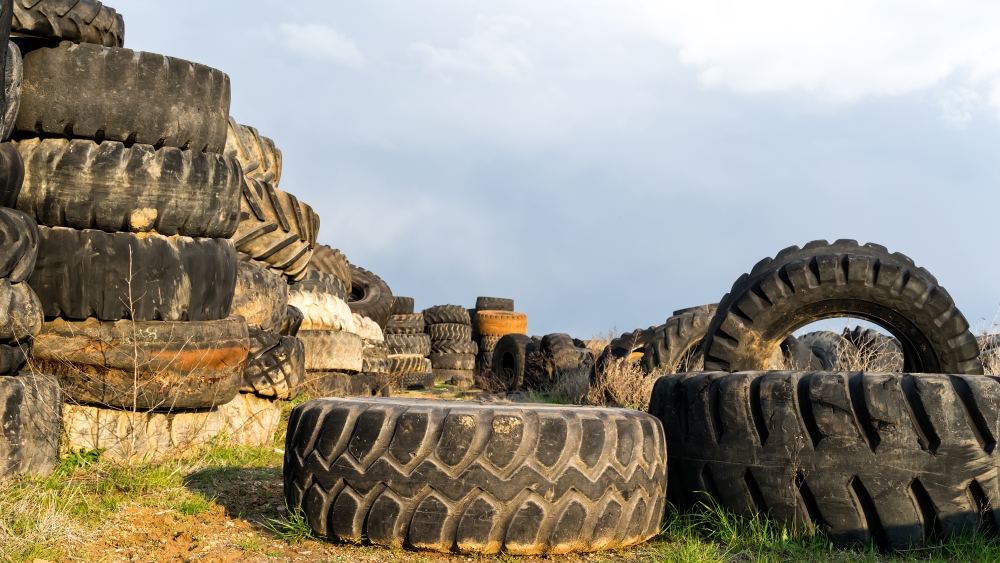
In Serbia, official statistics often combine all end-of-life tyres under a single code (EWC 16 01 03), without providing statistics for categories such as passenger, truck, agricultural, OTR, etc. According to a 2022 article, Serbia generates around 26,000 tonnes of waste tyres annually, with 85% of that being passenger car and truck tyres. We could say that this is the first issue that not only Serbia, but countries in the Balkans face in general: this lack of distinguished data represents an overall structural weakness. It can be difficult to design targeted collection, reuse and recycling strategies without knowing which type of tyres dominate the waste sector.
More recent reports state that over 55,000 tonnes of tyres are recorded as “recovered,” together with significant quantities historically landfilled. It is important to note that “recovery” in this context is not only recycling, but also co-incineration in cement kilns, where waste tyres are used as an alternative fuel.
In 2021, the Serbian Environment Protection Agency reported that between 2011 and 2020, nearly 400,000 tonnes of waste tyres were collected and treated in Serbia. The majority of the tyres went to recycling facilities, while the rest were burned as fuel in cement factories, which is a practice permitted under Serbia’s Law on Waste Management.
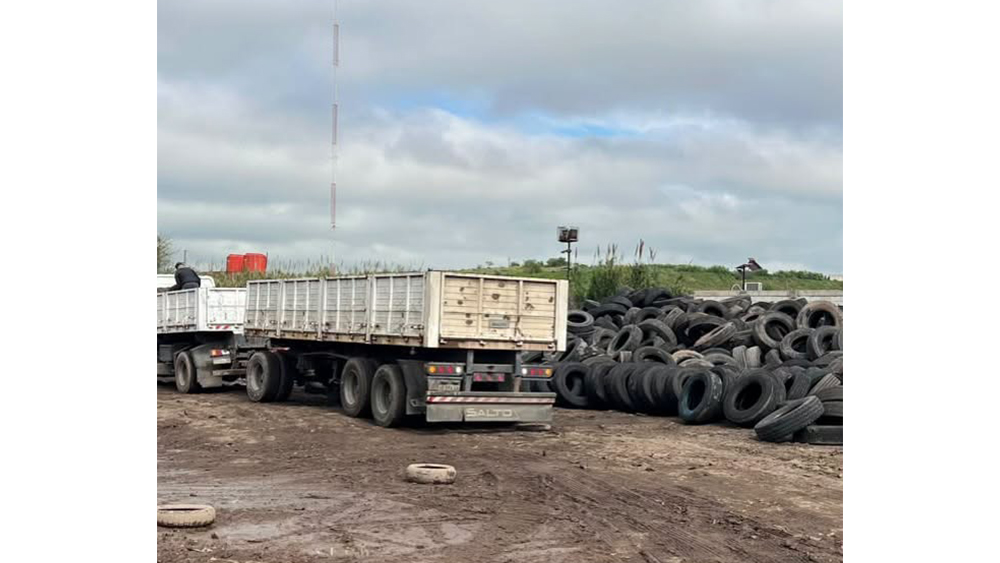
Transport and logistics are often the biggest challenges for waste tyre treatment and Serbia is no exception there as well. These tyres can be bulky, costly to move and geographically dispersed and with uneven collection networks, they can often fall outside organised systems. Illegal dumping, informal collection and non-reported flows still persist, partly due to limited inspections and low penalties for environmental offences.
Current Recycling and Retreading Market
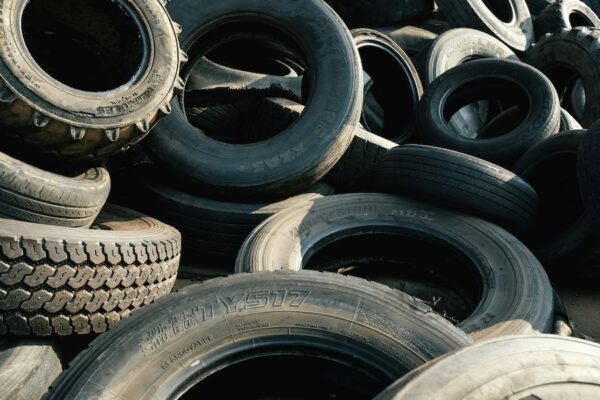
There are several companies in Serbia that focus on waste tyre treatment. For example, ECO-Recycling, founded in 2009 near Novi Sad, is often described as Serbia’s first dedicated tyre recycling company. It focuses on processing waste tyres into rubber granulate and derived products, purchasing tyres directly from the market. Other companies include Balkan Tyres Recycling in Obrenovac and Steel Impex, which focuses on waste processing in general and manufactures rubber products from recycled tyres.
When it comes to retreading, a 2023 article indicates that there were 53 companies in Serbia that are registered under activities that include “production and retreading of vehicle tyres.” Companies like Pneutech, which collaborates with Italy’s Marangoni, primarily focus on truck tyre retreading.
Cooperating with Italy
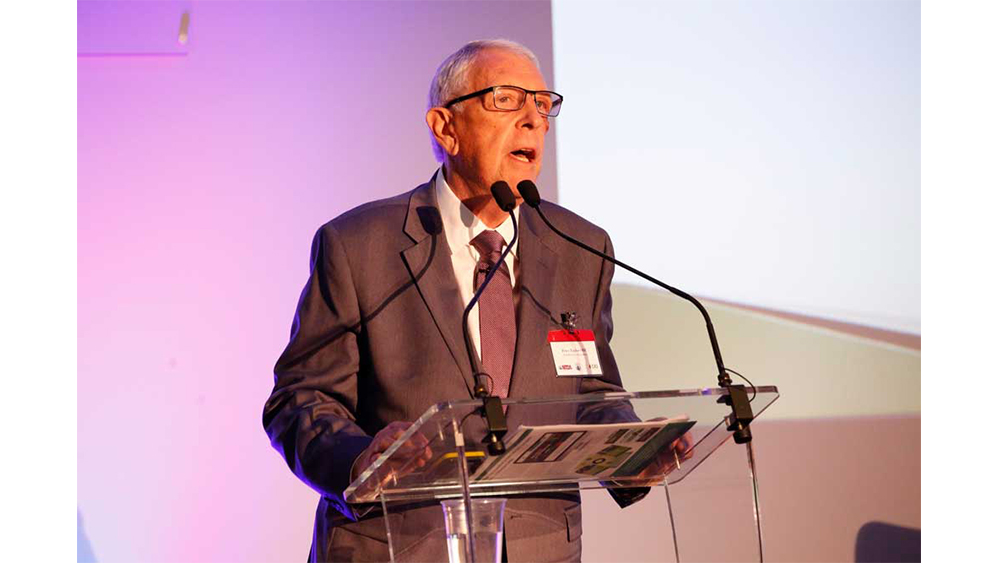
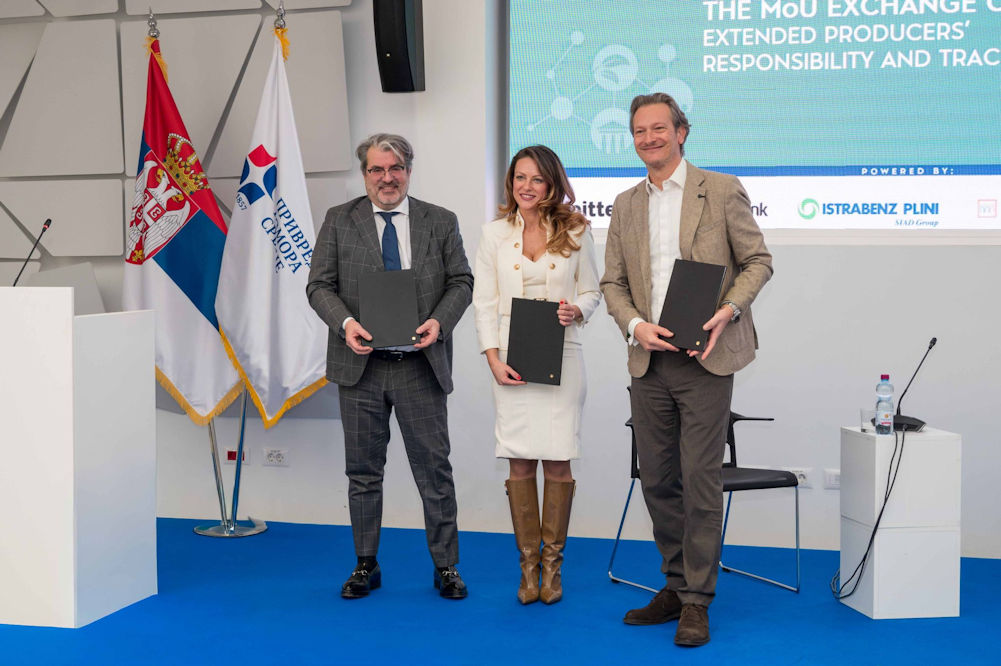
In December 2025 at the “Future-Proof Industry: Innovation, Partnerships and Sustainable Growth” conference held at the Chamber of Commerce and Industry of Serbia (CCI Serbia), representatives of Confindustria Serbia, Innovando and CCI Serbia signed a MoU, marking the first step in the creation of the first bilateral ecosystem for the implementation of the EPR scheme in the tyre sector in Serbia.
Mihailo Vesović, Vice President of the Chamber of Commerce and Industry of Serbia, pointed out that emissions in certain sectors are higher than the EU average, while also referring to the introduction of the European CBAM mechanism, which provides additional incentives for faster harmonisation.
Cveta Majtanović, Director of Sustainable Development at Innovando and Rubber Conversion, said: “About 10 years ago, as Innovando, we invested in Rubber Conversion, which we also founded. This is a patented technology for rubber devulcanisation. The idea was to close the loop and enable tyre manufacturers to reuse this material circularly, so that it is not incinerated, but returned to the production process.” She also spoke about the tyre tracking system they developed with Michelin, which was presented last year in Bologna, where tyres are tracked physically using RFID tags and QR codes, in addition to digital documentation.
Romano Rosi, President of Confindustria Serbia, stated that over the past three years, Confindustria has implemented an intensive programme of workshops and conferences dedicated to ESG topics, investing time, expertise and significant resources.
Italy has a long experience when it comes to EPR schemes, which can certainly help Serbia in establishing a well-functioning scheme for itself. However, the Italian EPR system has faced challenges as well, which can offer a valuable lesson for late adopters, such as Serbia.
Some reports have pointed to period failures in collection coverage, especially in geographically isolated regions, where tyre dealers have complained about stockpiling end-of-life tyres due to delayed pick-ups. Some investigations have also highlighted tyres entering the Italian market via illegal imports or online sales, undermining EPR financing and distorting recovery targets.
Whether these issues Italy faced can actually help Serbia when implementing its own EPR scheme is yet to be seen. However, they can certainly serve as an example when adopting such schemes for the first time, since the country can already see what issues can arise and hopefully avoid them.
The recent MoU is a signal of intent rather than a technical agreement in an environment where waste tyres sit at the intersection of environmental policy, industrial strategy and regulatory credibility. The current system in Serbia is data-poor, fragmented and reliant on energy recovery, which marks it misaligned with European circular economy expectations. Implementing EPR schemes is a pathway to a higher level of transparency, improved logistics and a more open hierarchy of treatment options. Italy’s experience can help Serbia understand both the strengths and the limitations of an EPR framework and therefore provide the country with practical examples rather than solely a theoretical model. Whether this initiative will be a success is yet to be seen and depends largely on execution, including enforcement, reliable data collection, and the country’s willingness to prioritise material recovery over disposal.
Image credit: Confindustria Serbia, Adam Kring/Unsplash