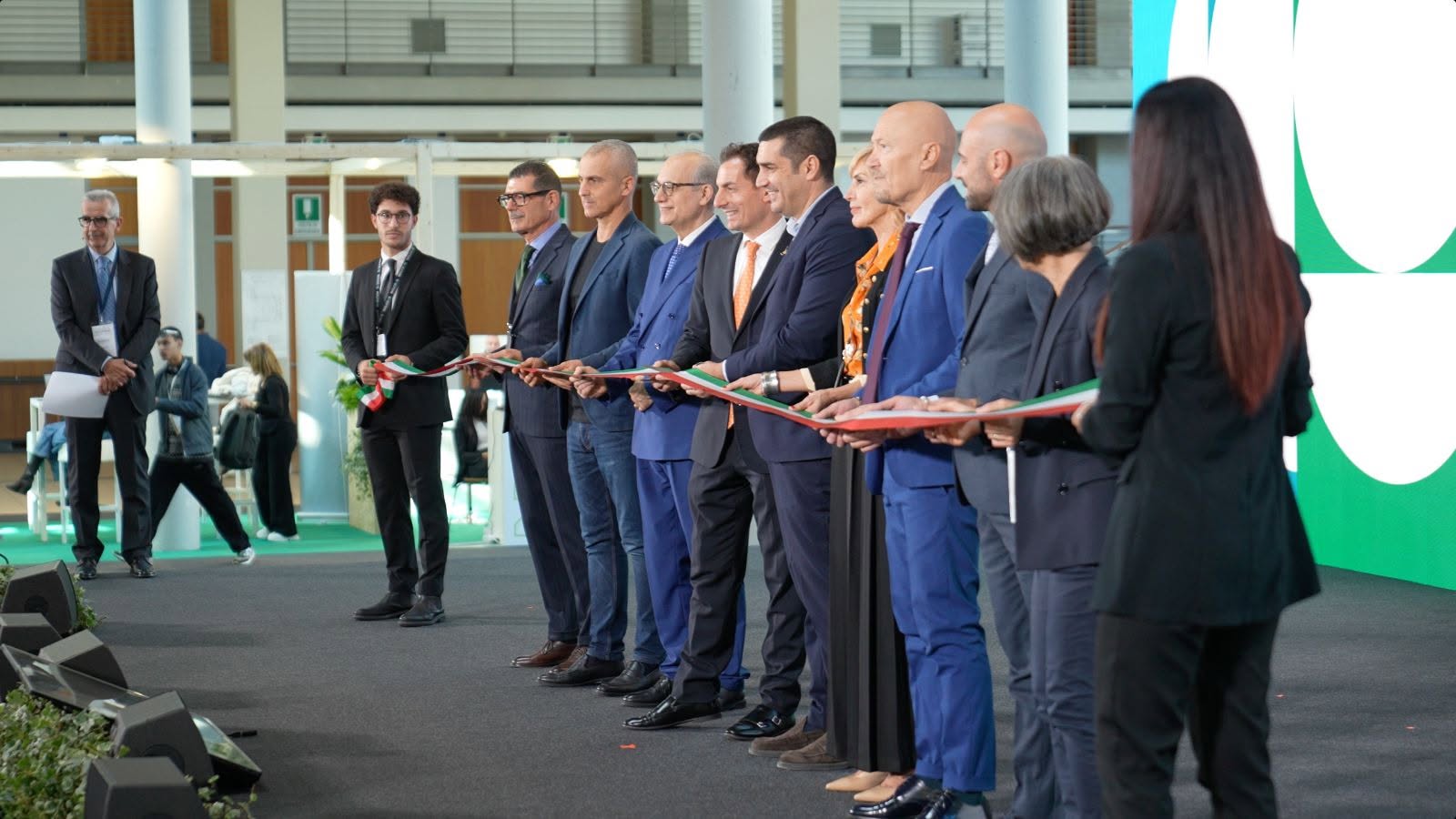
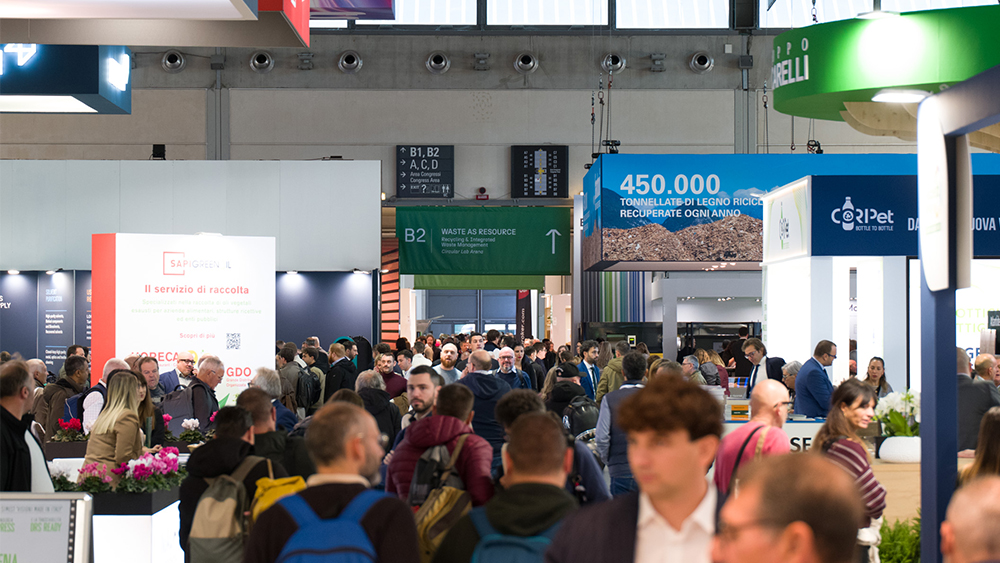
Ecomondo 2026 has brought together representatives from European institutions, industry and research organisations to discuss developments in the green economy, recycling, industrial competitiveness and the circular economy. The event’s programme has covered a wide range of topics, from the future of European waste management and secondary raw materials markets to climate resilience and digital technologies
The 15th edition of the States General of the Green Economy, organised by the Foundation for Sustainable Development under the patronage of the Italian Ministry of the Environment and Energy Security, the European Commission and the Ministry of Enterprise and Made in Italy, examined the progress of the green transition.
Edo Ronchi, president of the Foundation, said the ecological transition had become a structural necessity for socio-economic stability, although progress in Italy remained uneven. An international session, organised with Italy for Climate, explored how the green economy could help address climate risks and reduce dependence on imported fossil fuels and raw materials.
Raimondo Orsini, Director of the Foundation, said: “The green economy offers a concrete response because it reduces climate crisis risks and ensures less dependence on imported fossil fuels and raw materials, which are often the cause of these global problems.”
The third ESG CEO Summit at Ecomondo 2026 examined how companies can turn sustainability into a factor for growth and competitiveness, with discussions covering investment priorities, human capital, demographic challenges, corporate sustainability strategies and cooperation between businesses.
Ecomondo and TEHA Group commissioned the analysis, which was introduced by Carlo Cici from TEHA Group and Andrea Alemanno from Ipsos, beginning with a speech by Corrado Peraboni, CEO of IEG. A round-table discussion involved executives from Acea Ambiente, Toyota Material Handling Italia, Aquanexa, Suez Italia and Caviro Extra.
A conference on the Circular Economy Act focused on the role of the circular economy in European industrial competitiveness and its implications for European packaging.
The event featured a presentation of a study by CONAI and TEHA Group, A New European Industrial Policy for the Circular Economy. Discussions covered the development of a European market for secondary raw materials, supply and demand, interoperability between national systems and the investment needed to strengthen industrial competitiveness, with representatives from European and national institutions, the Foundation for Sustainable Development, Verpact and EXPRA.
“Adaptive regeneration of coastal areas and territory – what opportunities from the European climate resilience framework?” meeting, organised with the Ministry of the Environment and Energy Security (MASE), ISPRA, the Emilia-Romagna Region, GNRAC and the Conference of Peripheral Maritime Regions of Europe, explored opportunities under Europe’s climate resilience framework.
The meeting involved representatives from European and national institutions, such as the Italian Government, NRRP-NIPEC Technical Committee, MASE, the European Investment Bank, academic, regional and local authorities, who discussed topics such as multi-level governance and collaboration with local territories on climate adaptation and ecosystem restoration, highlighting Emilia-Romagna Region’s role in launching the Water Resilience Alliance, and local initiatives.
The textile industry’s programme at Ecomondo 2026 included a conference called “ESPR and Digital Product Passport in textiles: traceability and transparency along the value chain,” where participants discussed how digital technologies and artificial intelligence could improve product traceability, textile waste collection and the quality of secondary raw materials.
The conference examined the information required in digital product passports and the importance of reliable, interoperable data throughout the supply chain, featuring speakers from the Ministry of Enterprise and Made in Italy (MIMIT)and EURATEX, and representatives from research, academia, industry associations and companies such as Bulgari, Calzedonia, Brandart and Saipem. A separate session explored reuse, repair, durability and eco-design in the textile sector.
Ecomondo 2026 also featured the sixth Africa Green Growth Forum, focusing on the Mattei Plan and cooperation between institutions and the private sector for sustainable development in Africa. Other scheduled events included the Lorenzo Cagnoni Awards for green innovation, a session on the implementation of the Industrial Emissions Directive 2.0 and a discussion on EU-Africa strategic corridors for cooperation on critical raw materials.