On 15 October 2026, the Australian House Standing Committee on Industry, Innovation and Science tabled its report, “When the rubber hits the road: inquiry into the Australian tyre industry,” with 12 key recommendations, including an audit of the voluntary stewardship scheme and consideration of a mandatory national scheme
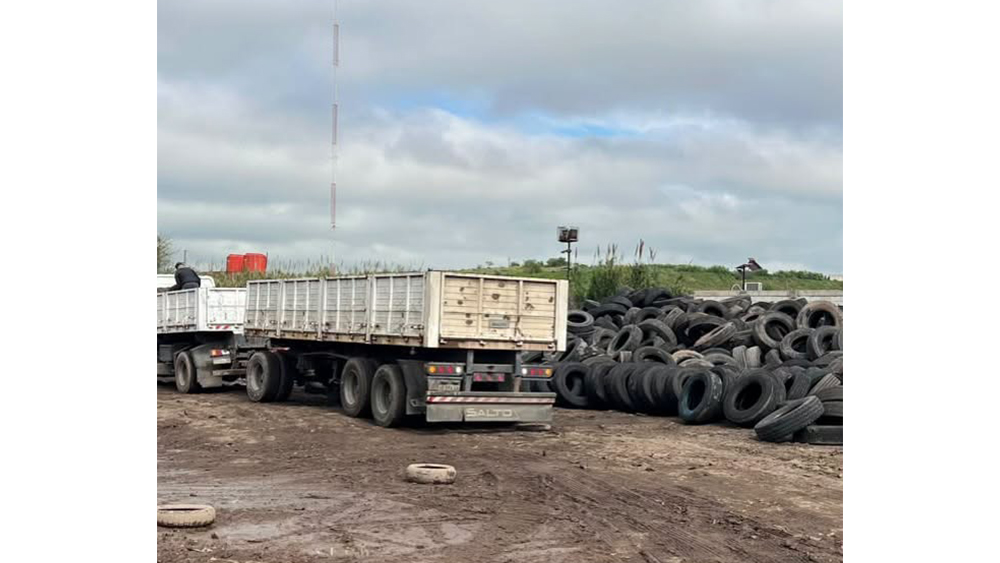
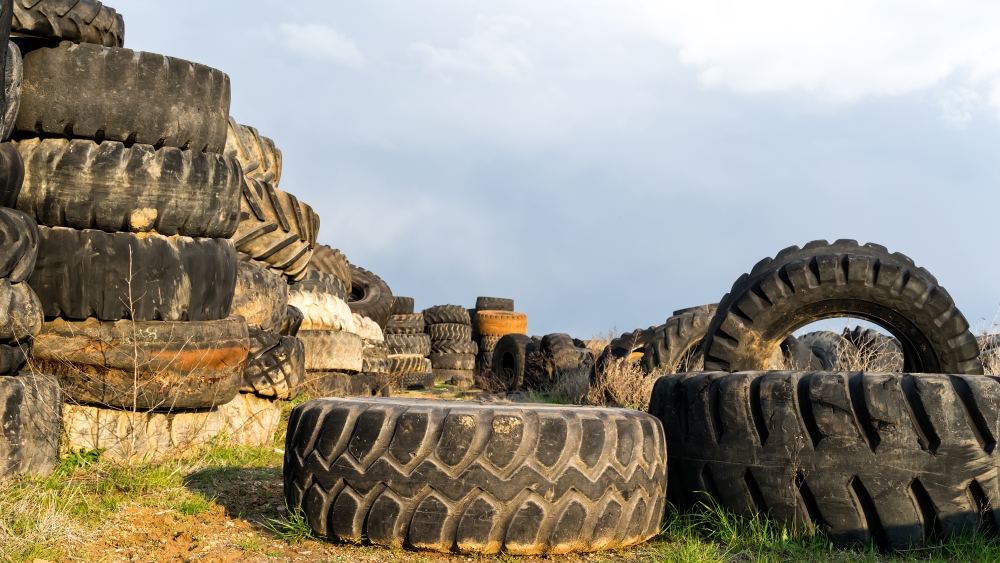
In 2023-24, Australia consumed about 740,000 tonnes of tyres, according to Tyre Stewardship Australia (TSA) data. About 537,000 used tyres were generated, which is more than 67 million end-of-life tyres. Passenger and truck and bus tyres have a combined recovery rate of 87%, while only 13% of OTR tyres were recovered, and more than 100,000 tonnes were estimated to have been buried that year.
The last tyre factory in Australia closed in April 2010 and the industry relies almost entirely on imports. The voluntary TPSS, run by TSA since 2014, is funded by a $0.25 levy per equivalent passenger unit on contributing importers, capped at $50 per tyre. In 2024-25, contributing companies imported 53% of replacement tyres, down from 57% the previous year. TSA told the enquiry that participation among vehicle importers is about 3% by market share. The Department of Climate Change, Energy, the Environment and Water (DCCEEW) has not audited the scheme.
The Australian tyre recycling inquiry was announced on 7 November 2025 and received 71 submissions and 17 supplementary submissions. The committee held eight public hearings in Canberra, Western Australia, Victoria, Queensland and New South Wales. Members also visited 13 recycling, retreading and research facilities, among them Tyrecycle, RubberGem, Elan Energy Matrix, Bridgestone’s Bandag plant, Michelin’s retreading facility and SMaRT@UNSW.
The committee made 12 recommendations. The first four concern regulation and imports, asking the Australian Government to develop, together with the states and territories, a nationally harmonised framework for end-of-life tyres, with consistent definitions, storage, transport and processing requirements and landfill controls. It also proposes a national framework for OTR tyres that gives priority to recovery, reuse and recycling over on-site burial. This framework would include a staged reduction of burial over five years, interim recovery targets, support for regional and remote infrastructure and public reporting on progress. The committee explicitly did not support an immediate ban, because processing capacity differs considerably between regions. In addition, it recommends a review of the rules for replacement tyres, which are currently not covered by the Australian Design Rules, and a review of how the export rules for waste tyres are not enforced.
The next four recommendations deal with product stewardship. The committee asks DCCEEW to carry out an independent audit of the TPSS and to publish the findings publicly. Pending the result, the Government should strengthen the stewardship framework, including by considering a transition to a mandatory national scheme under the Recycling and Waste Reduction Act 2020. If such a scheme is created, the operator should be selected through an open and competitive tender and the scheme should provide dedicated and continuing funding for collection, storage, transport and processing infrastructure, particularly in regional, rural and remote areas. The scheme should also recognise the higher cost that geographically dispersed communities face and improve access to viable recovery and recycling pathways across Australia.
The final four recommendations focus on markets and circularity. The committee asks the Government to support the wider use of crumb rubber in road construction through national specifications, procurement settings and demonstration projects, and to treat tyre retreading as a priority circular economy activity. The committee also recommends stronger Commonwealth procurement policies that favour Australian-made products containing recycled tyre material and retreaded tyres, particularly for government heavy vehicle fleets. Finally, it proposes clearer cooperation between industry, universities, CSIRO and other research institutions to bring new recycling technologies to market faster.
The inquiry was conducted by the House of Representatives Standing Committee on Industry, Innovation and Science. It was chaired by Mr Rob Mitchell MP (McEwen, Victoria). Hon Michael McCormack MP (Riverina, New South Wales) served as Deputy Chair and was succeeded in that role on 2 June 2026 by Mr Pat Conaghan MP (Cowper, New South Wales). The other members were Mr Baseem Abdo MP (Calwell, Victoria), Ms Nicolette Boele MP (Bradfield, New South Wales), Ms Alison Byrnes MP (Cunningham, New South Wales), Hon Michelle Landry MP (Capricornia, Queensland), Ms Zaneta Mascarenhas MP (Swan, Western Australia), Mr Dan Repacholi MP (Hunter, New South Wales), Ms Jess Teesdale MP (Bass, Tasmania) and Mr Tom Venning MP (Grey, South Australia). Staff of the Department of the House of Representatives supported the committee.