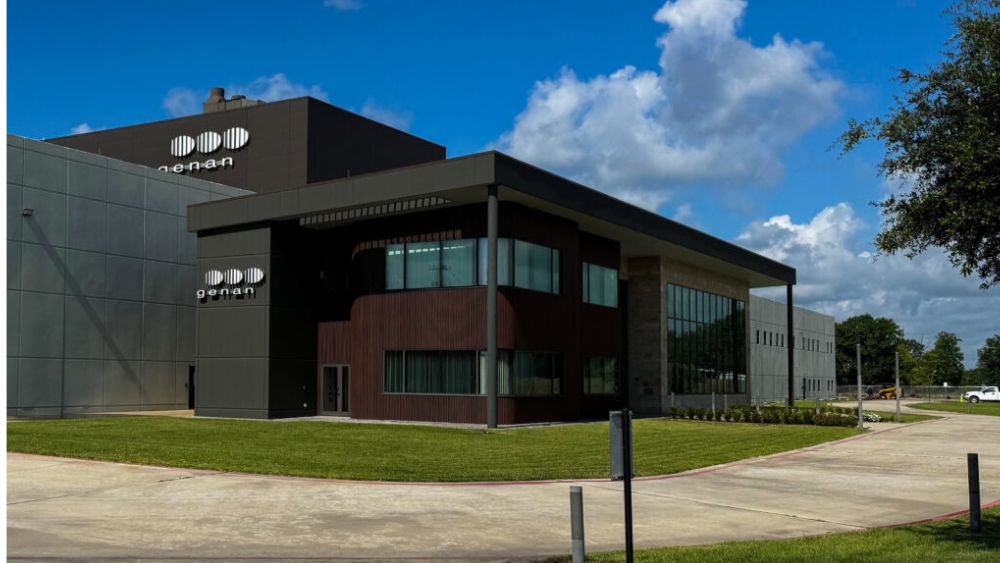
Genan has agreed to sell its recycling plant in Houston, Texas, to Liberty Tire Recycling, which forms part of a wider strategy to concentrate resources on growing the group’s European operations
Genan signed the agreement to sell its US operations to Liberty Tire Recycling, which is owned by global infrastructure investor I Squared Capital. Genan entered the US market in 2014 and has since built a solid position in North American end-of-life tyre (ELT) recycling. The Houston plant has grown into a strong, profitable business, and Genan’s management judged the time right to change ownership.
Group CEO Poul Steen Rasmussen said: “We are most satisfied with the way our US factory has developed, and with the value we now realise by divesting. When we set up business in the USA in 2014, the ambition was to demonstrate that Genan’s technology and business model could also work in the North American market. That we have proven, and we now assess that the new owner is in a better position to take the factory to the next level.”
“Now is thus the right time to get a satisfactory price and to let a new owner take the Houston plant further forward. At the same time, it gives us the opportunity to untie resources for further development of our European activities, where we see by far the largest development potential for Genan,” he added.
Liberty Tire Recycling is not a new face to Genan. The company has supplied feedstock to the Houston plant for the past 11 years as its main partner. I Squared Capital took over Liberty Tire Recycling at the end of 2025, and Rasmussen described it as the obvious buyer for the Houston operation.
“Liberty Tire Recycling is the natural buyer. They have in-depth knowledge of the market, the customers and to some extent also of our factory; and they are thus in the very best position to further develop it. At the same time, they can harvest considerable industrial synergies,” he said.
The divestment takes effect from 15 July 2026, coming just weeks after Genan’s acquisition of ESTATO Umweltservice in Germany. Together, the two deals underline the company’s growth ambitions in Europe.
“We have proven that our business model is solid and financially sustainable. Now we need to take Genan to the next level, and we have no doubt that the most attractive opportunities for us lie in Europe. Here, we experience increasing political and commercial interest in raw materials from recycling. Moreover, the market is still fragmented, and there are thus lots of opportunities to strengthen the industry through investment, modernisation and consolidation,” Rasmussen added.
Following the divestment, Genan’s remaining recycling plants are located in Denmark, Germany and Portugal.