As the tyre recycling sector continues to grow, recovered carbon black (rCB) is emerging as one of the most important materials produced from tyre pyrolysis. In Episode 90 of the Tyre & Rubber Recycling Podcast, we spoke to Andreas Steinlage, Senior Business Development Manager at Netzsch, who explained how the company’s technology supports producers in refining pyrolysis char into high-quality rCB
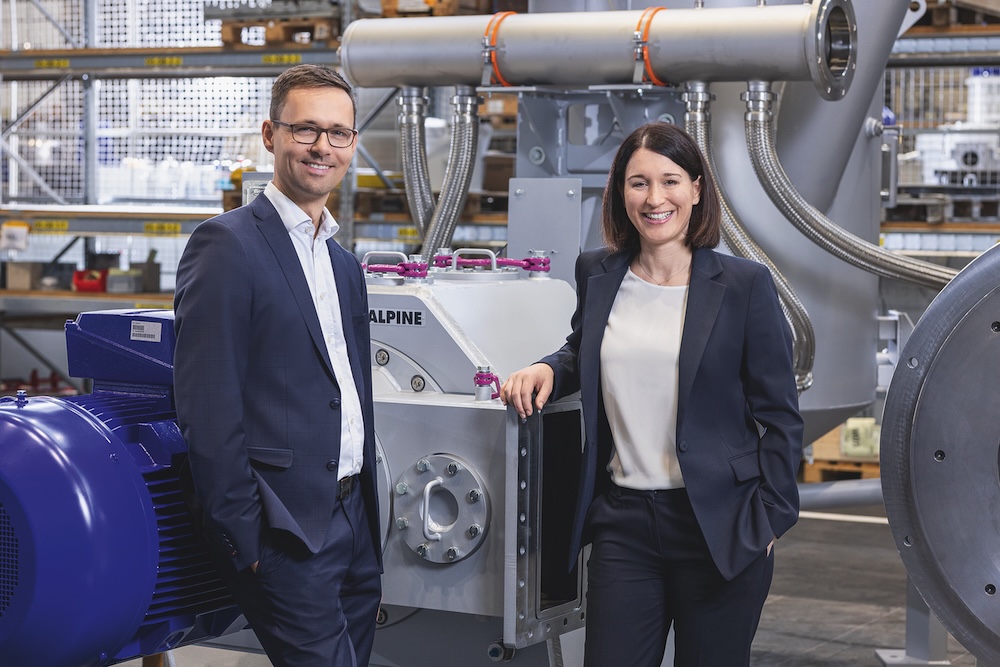
Located in Bavaria, Germany, Netzsch is a family-owned business with a history spanning more than 150 years. Today, the company employs more than 4,800 people and operates around 200 locations worldwide. Netzsch’s operations are divided into three business areas: Pumps and Systems, Grinding and Dispersing and Analyising and Testing.
When it comes to the tyre recycling industry, the Grinding and Dispersing sector plays a particularly important role, offering a wide range of equipment for dry and wet grinding, mixing, dispersing and particle classification – all of which is being increasingly applied in rCB processing.
According to Steinlage, Netzsch’s dry grinding and classification technologies can be applied directly after pyrolysis. The char can typically be fed into a milling system with particle sizes up to around 6 mm. From there, the material is ground down to fine powders, with a common specification request by customers being a particle size distribution of D97 at 10 microns, or D90 at 10 microns.
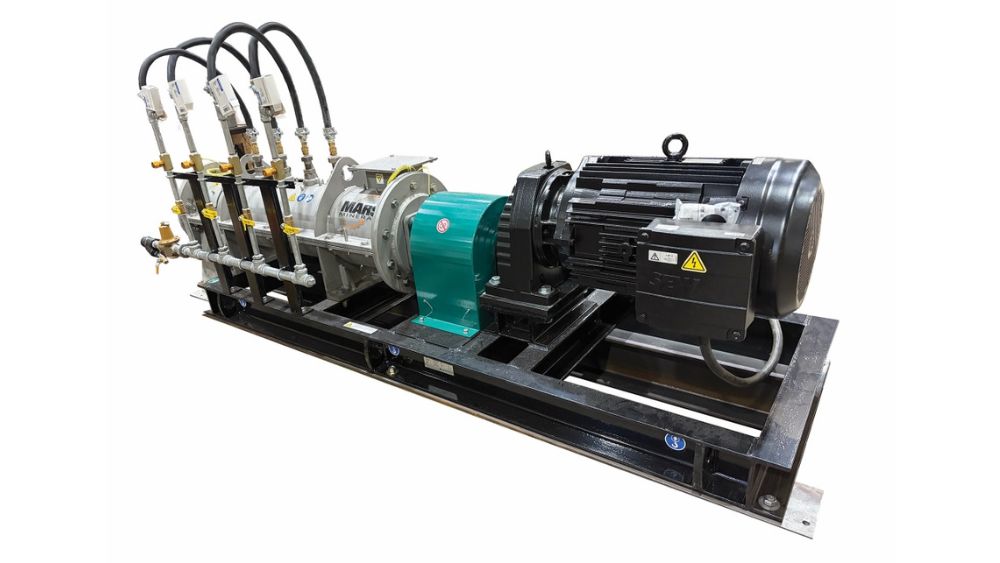
Steinlage also noted that jet milling is often the most economical processing method, with Netzsch fluidised bed jet mills designed to achieve high productivity while maintaining precise particle size control. For example, the Netzsch CGS 180 fluidised bed jet mill can process up to 7,500 kg of fine de-agglomerated rCB, while the Netzsch CGS 100 batch-type mill can achieve production rates of up to 2,400 kg.
Netzsch can also supply downstream processing equipment, including granulation, drying and sieving systems, helping customers implement integrated processing lines.
Steinlage also highlighted the company’s classifier wheel technology, which allows narrow particle size distributions with fewer oversized particles. The latest Netzsch steam-based classification technology can achieve cut points below 1 micron, helping producers remove unwanted fractions from the particle size distribution.
Netzsch also introduced the E-Jet process, designed to reduce energy consumption in jet milling. The system uses a single-stage compressor operating at around 3.5 bar, eliminating the need for cooling stages. The resulting compressed air reaches temperatures of around 220°C and can be used directly in the grinding process. This approach can reduce energy consumption by up to 30%.
Looking ahead, Netzsch sees strong growth potential in the rCB sector, with several new production facilities planned within the European Union, while many existing ones are preparing to expand their capacities. Steinlage expects demand for rCB to increase significantly in the coming years as sustainability requirements continue to influence the tyre and rubber industries.
Image credit: Netzsch