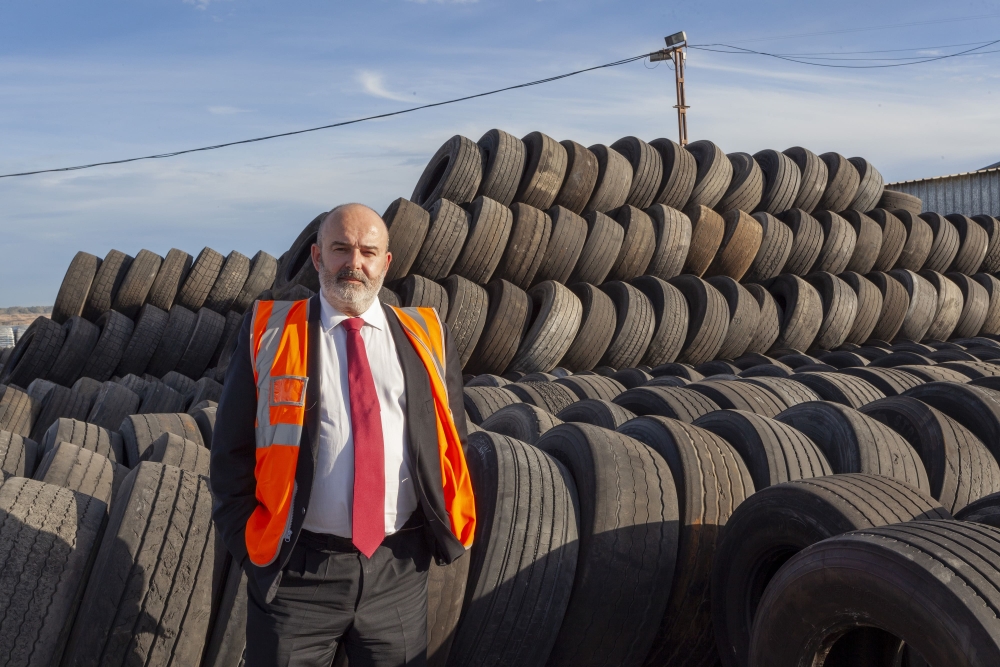
Javier de Jesús Landesa is Chief Operating Officer of TNU, the Spanish compliance scheme responsible for managing end-of-life tyres. In this opinion piece, titled “Recycling Isn’t Enough: Why Green Public Procurement Is the Missing Piece in the Circular Economy,” he argues that recycling tyres is only half the job; the circular economy doesn’t actually close until recovered materials (rubber granulate, retreaded tyres, recovered carbon black) find real buyers. He points to declining use of rubberised asphalt and a shrinking Spanish retreading industry as evidence that good materials are going to waste for lack of demand, not lack of quality.
His proposed fix: public bodies should use their purchasing power, Green Public Procurement, to deliberately favour recycled and retreaded products in public contracts, the way Italy already does with a mandatory retread quota in its public vehicle fleets. He frames this as the logical next step for Spain’s new tyre-recycling regulation, Royal Decree 712/2025.
Recycling Isn’t Enough: Why Green Public Procurement Is the Missing Piece in the Circular Economy by Javier de Jesús Landesa
Recycling alone doesn’t complete the circular economy. That only happens once recovered materials genuinely re-enter the market. Getting there requires policies that actively generate demand — from Green Public Procurement to broader incentives for using recycled raw materials.
For years, we’ve treated the circular economy as more or less synonymous with recycling. That’s understandable. But recycling is only one part of the process. The real objective is for recovered materials to be put back into use, displacing virgin raw materials. That, arguably, is the central challenge facing the circular economy today.
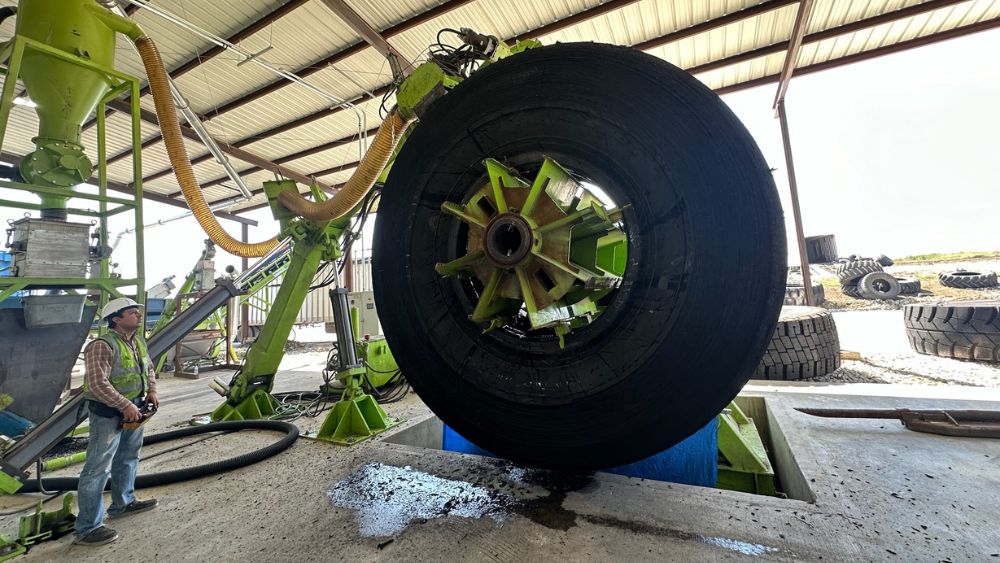
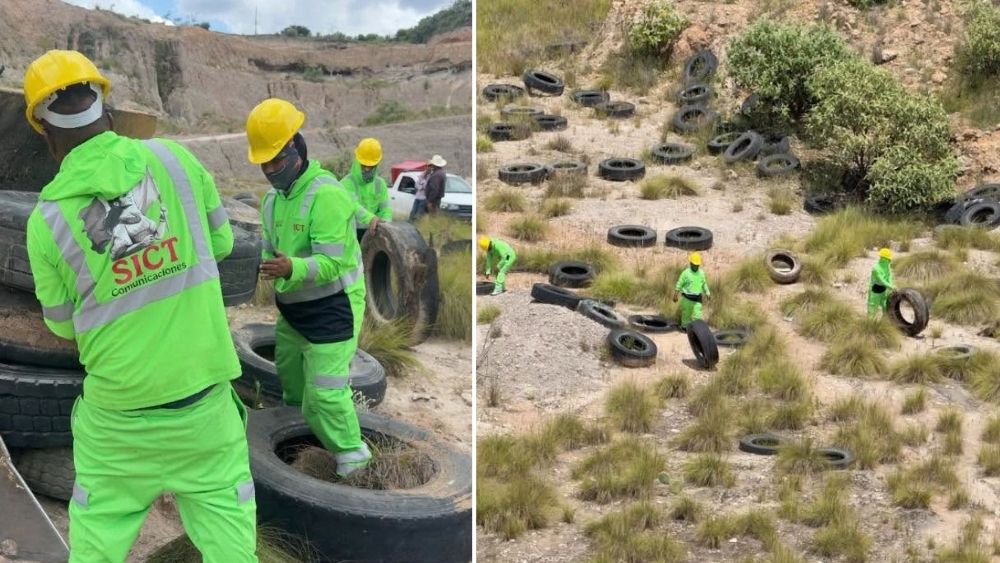
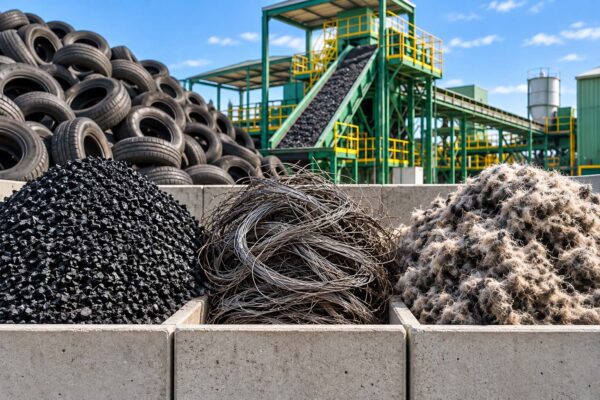
Take end-of-life tyres (ELTs). Spain already has a fully established management system, along with an industry capable of turning this waste stream into new resources — rubber, steel, textile fibres and other raw materials with a wide range of uses. The challenge is no longer simply recycling them; it’s making sure those materials find a market that will actually absorb them. A recycled material with no commercial outlet ends up losing much of its environmental, economic and industrial value.
Recycled rubber granulate is probably one of the clearest examples. Its technical performance has been proven for years. It produces more elastic, longer-lasting bituminous mixes for road surfacing, cuts road noise, and improves asphalt’s resistance to ageing and fatigue. It also shows up in safety surfacing, playgrounds, sports facilities, civil engineering works, acoustic insulation and street furniture.
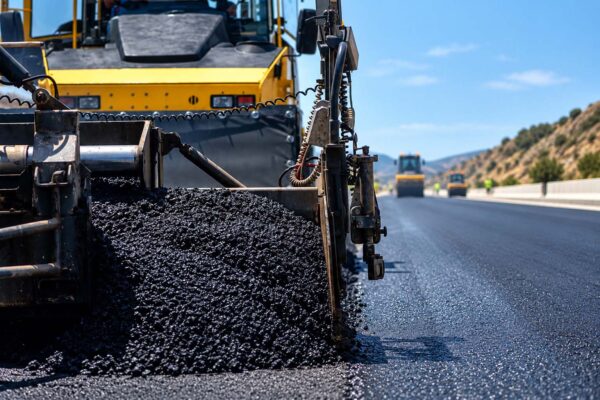
And yet its use remains well below its real potential. One figure makes the point: consumption of rubber-modified bitumen has fallen from around 10,000 tonnes in 2005 to under 3,000 tonnes today, despite its technical advantages being as well established as ever. That’s not because the material doesn’t perform — it performs very well. It’s because too many purchasing decisions are still made purely on upfront cost, with too little weight given to the total cost of an asset over its full working life.
The same point applies to retreaded tyres. Retreading is one of the best real-world examples of applied circular economy: it extends a tyre’s working life and significantly cuts the raw materials and energy that go into it. Compared with manufacturing a new tyre, retreading can save up to 70% of the oil used, 24% of the water, and cut CO₂ emissions by around 30%.
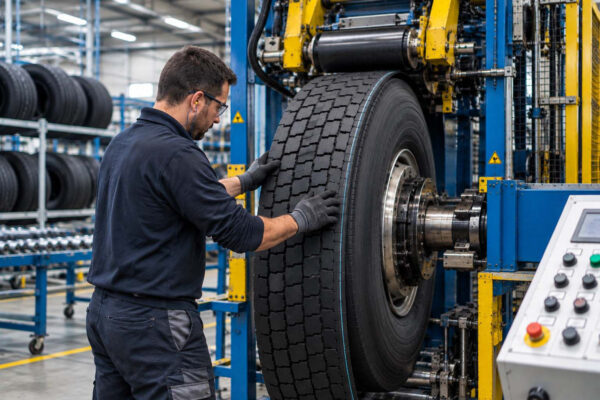
It’s no accident that Royal Decree 712/2025, Spain’s new regulation on end-of-life tyres, places preparation for reuse — the category that retreading falls under — ahead of recycling in the waste hierarchy. In fact, it sets a minimum target of 15% by weight for preparation for reuse for 2025, 2030 and 2035 alike, underscoring how central extending tyres’ working lives is to the circular economy the regulation envisages.
Even so, the reality of Spain’s retreading industry gives pause for thought. Over the past 20 years, production has fallen by 52% — from 1,132,500 retreaded tyres to 540,850 — while the number of retreading plants has dropped from 46 to 19.
The causes are varied: growing competition from low-cost imported tyres, shifts in the market, and the limited development of mechanisms that would let retreading’s environmental and economic advantages actually translate into value.
This is where Green Public Procurement could become a genuinely useful tool. Building environmental criteria into public tenders would help drive uptake of retreaded tyres across fleets and services where it’s technically and operationally viable — creating steady demand that supports the industry and helps meet the very targets set out in Royal Decree 712/2025.
Italy offers a working example: since 2021, it has maintained a minimum 30% quota for retreaded tyres in certain categories of public vehicle fleets — proof that public procurement can be an effective lever for driving the circular economy and shoring up domestic industry.
The need to build new markets becomes even clearer when you consider that some traditional uses for recycled rubber — granulate infill for artificial turf pitches, for instance — are facing major regulatory change in Europe, forcing the industry to find new outlets for these materials.
New recycling technologies point to the same lesson. Pyrolysis, for example, shows just how much market-building matters. We can now recover genuinely valuable raw materials this way — recovered carbon black among them — with real potential to go back into new tyre manufacturing and other industrial products. In large part, the challenge here isn’t technological anymore. It’s commercial and industrial.
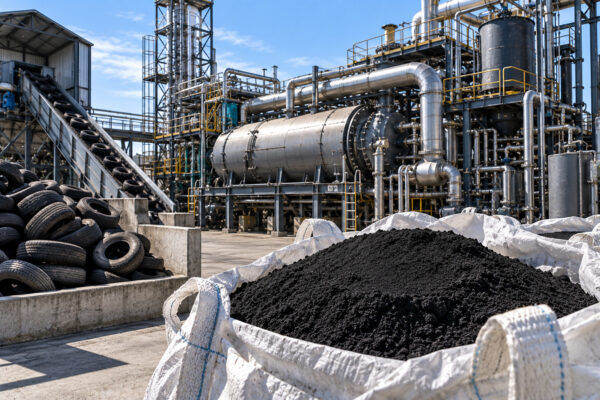
What these materials need is enough demand to establish themselves as genuine secondary raw materials. That’s why the conversation about the circular economy can’t stop at how to recycle better. It needs to take on an equally important question: how do we drive uptake of recycled materials?
And this is exactly where government has extraordinary scope to act. Green Public Procurement is arguably one of the most effective tools available for accelerating this shift.
Public administrations are among the country’s largest buyers. Every public contract is a chance to drive uptake of recycled materials, encourage innovation, and help markets that still need to grow reach real scale.
Building environmental criteria into public tenders, favouring bituminous mixes containing rubber, promoting the use of retreaded tyres in certain fleets, of street furniture and ELT granulate made from recycled materials, or incentivising the use of secondary raw materials more broadly — all of this means acting on the demand side, which is precisely where one of the circular economy’s biggest challenges lies today: creating the conditions for recycled materials to compete on a level playing field, and to prove their technical, environmental and economic worth.
The tyre sector has shown it has the technical capability, the experience and the infrastructure needed to properly manage end-of-life tyres. What’s needed now is for the materials it produces to find stable applications and sufficient demand to realise their full potential.
The circular economy doesn’t end when waste is recycled. It’s only complete once that material goes back into the production process and displaces a virgin raw material. That’s the circle we still have to close.