A new study published in Resources, Conservation & Recycling examined how rubber from end-of-life tyres and recycled polyethylene plastic can be combined and upgraded into a high-performance asphalt modifier with lower greenhouse gas (GHG) emissions
The research, conducted by Yuzhao Han, Hui Li, Saad Khan, John Harvey, Angel Mateos, Cong Ma and Lei Wang, focused on blending crumb rubber (CR) from waste tyres with recycled low-density polyethylene (RLDPE) through a thermo-mechanical activation process. The resulting material, described as a thermoplastic rubber-polyethylene elastomer (TRPE), was developed to improve compatibility with asphalt while enhancing pavement performance.
Researchers said one of the main challenges in combining tyre rubber and recycled plastic with asphalt has been poor compatibility and excessive viscosity during mixing. According to the study, the thermo-mechanical activation process helped break down sulphur crosslinks in the rubber, shorten polymer chains, and increase polar functional groups, thereby improving the interaction between the recycled materials and asphalt binders.
The study found that activation temperature played the most significant role in determining the final structure and behaviour of the TRPE material. Moderate activation levels delivered the best balance of viscoelastic properties and asphalt performance, while excessive activation increased temperature sensitivity.
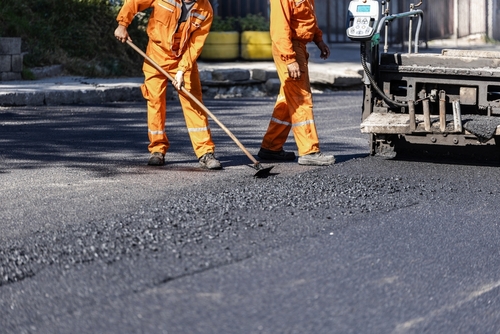
The modified asphalt demonstrated improved elasticity, crack resistance and durability, while also benefiting from the stiffness contributed by recycled polyethylene. Researchers noted that crumb rubber asphalt has already seen large-scale use in regions such as California, where rubberised asphalt accounted for more than one-third of hot mix asphalt tonnage placed in recent years.
Beyond technical performance, the study also highlighted the environmental benefits of the approach, showing that TRPE modifiers generated around 20% lower GHG emissions compared with conventional styrene-butadiene-styrene (SBS) modifiers at the material level, while asphalt pavement emissions were reduced by approximately 7.5%.
The researchers said the work provides a framework for developing high-performance asphalt materials from waste streams while supporting circular economy goals for tyres and plastics. The paper also reinforced the growing interest in tyre-derived materials for road construction as governments and industry continue seeking scalable applications for end-of-life tyres.
Image credit: Shutterstock