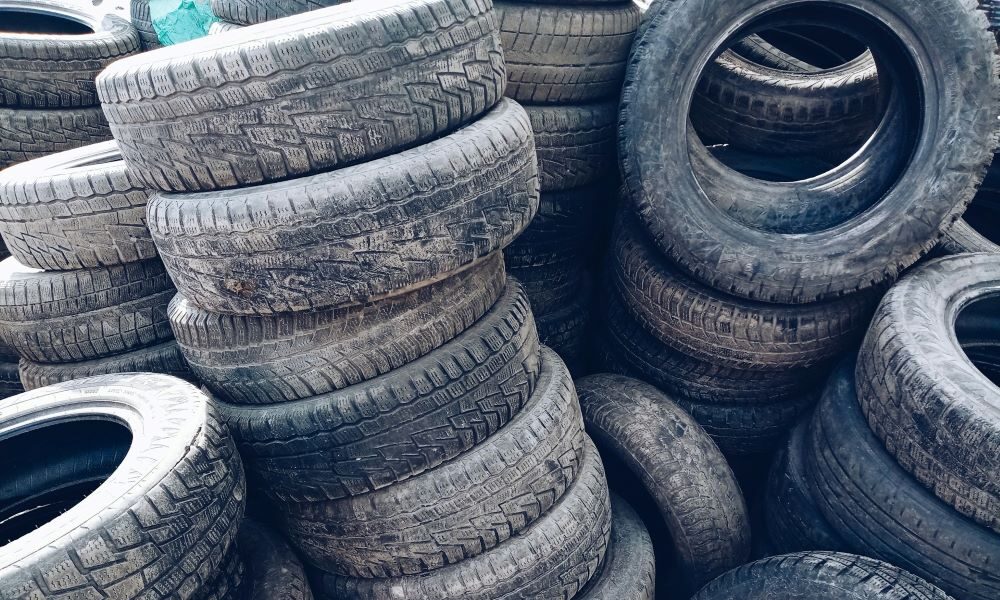
Scientists and environmental engineers are increasingly focused on the impact of 6PPD-Quinone (6PPD-Q), a chemical byproduct formed when tyre additive 6PPD reacts with ozone
While 6PPD has been used since the late 1960s to extend tyre life. However, in tyre road wear particles and crumb rubber exposed to the elements, 6PPD transforms into 6PPD-Quinone (6PPD-Q), which has been linked to severe toxicity in aquatic environments, even at extremely low concentrations. In German laboratory tests, it has been shown to have the potential to enter the human food chain.
Research has shown that the chemical is particularly harmful to fish species such as coho salmon, causing rapid, often fatal effects. “If you were to look at the top 10 chemicals that are considered the most toxic chemicals to aquatic life, 6PPD-quinone ranks number two,” said Tanya Williams of the Washington Department of Ecology.
Studies indicate that exposure can lead to high mortality rates, with fish dying within hours due to damage to blood vessels and brain function. As one researcher explained, “Their blood vessels… become more porous and start to leak… that means that their brain-blood barrier is compromised.”
The issue is closely linked to tyre wear particles entering waterways via road runoff and, to a lesser extent, artificial turf fields using crumb rubber infill. While turf fields have been identified as a source, researchers note that heavily trafficked roads may generate even higher concentrations due to increased tyre wear from braking and acceleration.
Rachel Scholes and her team of environmental engineers at the University of British Columbia studied how artificial turf runoff impacts salmon after a stream-keeper group reported a coho die-off in a stream near a turf field in North Vancouver. The study found that artificial fields continue to produce 6PPD-Q even after 10 to 15 years.
“It’s fortunately not a really hard chemical to treat,” Scholes said. “The bigger challenge is in existing fields. It’s not always feasible to easily retrofit them for that kind of treatment. So, the question becomes, ‘What do I do for the thousands of fields that are already in place?'”
Additional studies about 6PPD-Q are underway in Redmond, Spokane, Tacoma, the Snoqualmie Reservation, and at Washington State University. Jenifer McIntyre, associate professor of aquatic toxicology at Washington State University, and a team of researchers with the university’s Aquatic Toxicology Lab, tested fish in Miller Creek, a small stream that flows into Puget Sound south of Seattle. Study results showed that about 80% of the juvenile fish exposed to runoff containing 6PPD-Q after spring storms died.
In response to this, authorities in Washington State have launched multiple studies and committed significant funding to stormwater treatment and mitigation projects. Measures include improved filtration systems and the gradual replacement of crumb rubber in sports fields with alternative materials such as cork or thermoplastic elastomers.
Despite ongoing mitigation efforts, experts agree that the long-term solution lies in finding a viable alternative to 6PPD. However, this presents a complex challenge. “The next chemical that ends up replacing 6PPD… will end up being widely used around the globe,” Williams noted, highlighting the importance of avoiding unintended environmental consequences.
In 2023, the U.S. Environmental Protection Agency (EPA) began responding to concerns raised by Indigenous tribes and environmental groups in Washington and Oregon over the impact of 6PPD-quinone on aquatic life, particularly coho salmon. As part of this effort, the agency committed to building the evidence base for future regulation and has since introduced a draft testing method to help identify the presence of the chemical in stormwater and surface waters.
In parallel, research is progressing on potential solutions. In 2024, a team at the University of Delaware developed a method to remove 6PPD from tyre materials using chemical extraction, enabling its conversion into safer, reusable substances. The approach could support more sustainable recycling practices, although further work is needed to scale the technology for wider industry use.
Source: Jefferson Public Radio
Image credit: Ilya Chunin, Unsplash