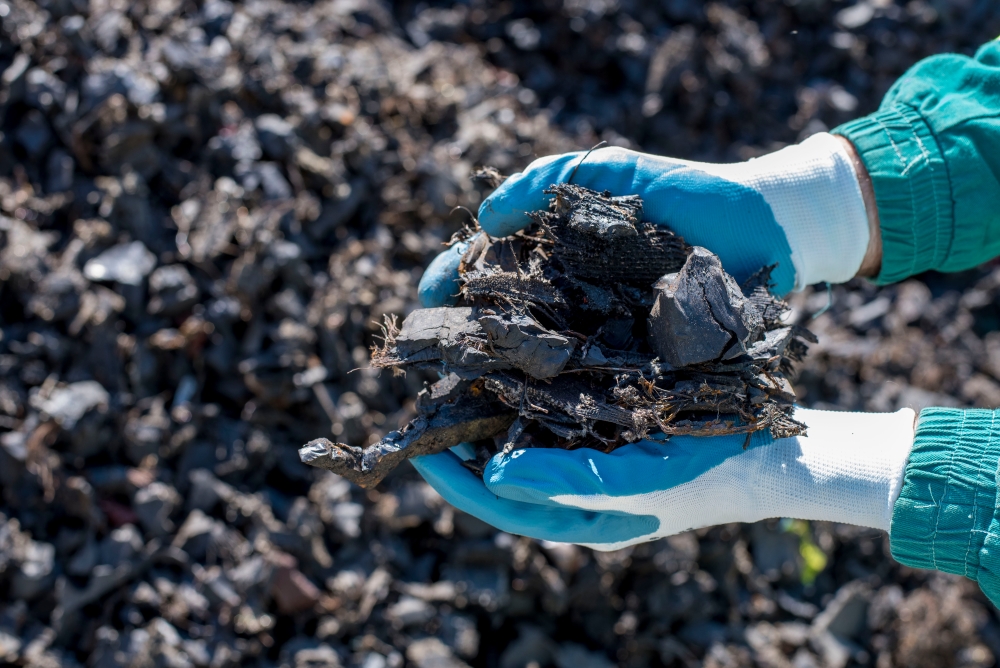
Life Cycle Assessment of Crumb Rubber, published by the Australian National Transport Research Organisation (NTRO), found that crumb rubber made from off-the-road (OTR) tyres could help reduce the greenhouse gas footprint of road pavements, while also extending pavement service life and reducing maintenance
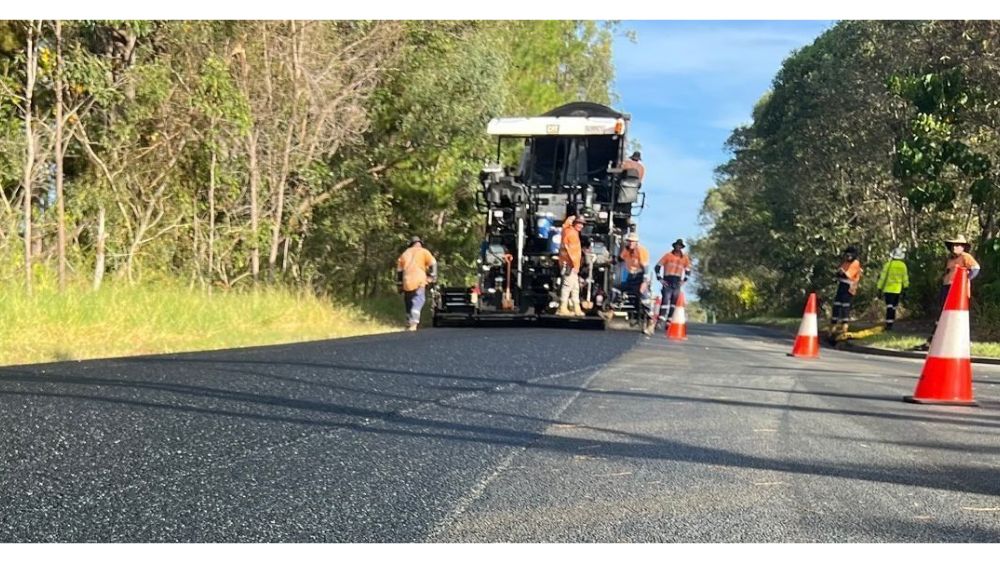
With data provided by Tyre Stewardship Australia (TSA) and Sunshine Coast Council, the assessment examined eight pavement treatments across three sites on the Sunshine Coast in Queensland, following a 2024 trial led by Sunshine Coast Council, which investigated the use of crumb rubber derived from OTR tyres used in construction machinery.
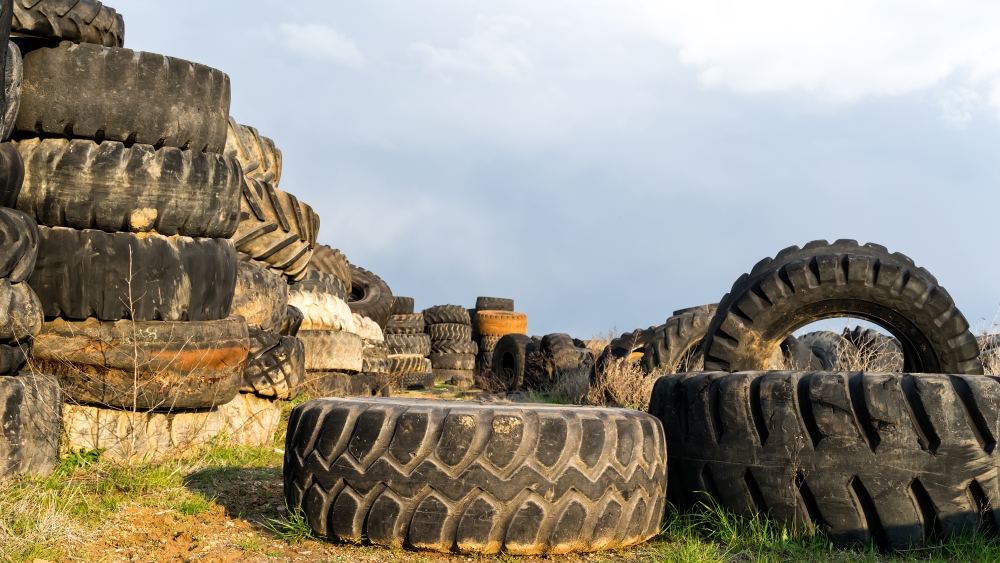
OTR tyres can be challenging to recycle due to their size, durability and use in remote locations. Life Cycle Assessment noted that these tyres are often buried or stockpiled on-site, creating environmental impacts while leaving potentially valuable material unused. The Sunshine Coast project served as an opportunity to examine whether this material could be incorporated into asphalt instead of conventional materials.
The trial compared conventional and polymer-modified asphalt with several crumb-rubber-modified mixes containing 18% OTR crumb rubber. Twelve months later, the trial found that OTR crumb rubber could be used interchangeably with traditional crumb rubber in bitumen without significant changes to binder blending, mix design or asphalt manufacturing process. The mixes also showed improvements in fatigue performance, cracking resistance and resistance to oxidative ageing.
Life Cycle Assessment also showed that material production accounted for around 65-85% of upfront emissions, meaning that the materials used to build a pavement have a bigger influence on initial carbon emissions than transport to the site or construction activities.
This initially presented a challenge for crumb-rubber asphalt, with rubber-modified mixes having higher upfront emissions than the conventional reference mixes at two of the three sites, due to the higher embodied carbon intensity of the CR-modified binders.
At Perlan Street, the crumb-rubber mixes reached greenhouse gas parity with the conventional pavement at a 20-30% increase in service life. At Railway Parade, parity was achieved with just a 10% service-life extension, while at Spalls Road, the crumb-rubber mixes reached parity at a 35% service-life extension and delivered further reductions at 50%.
Life Cycle Assessment translates these results into reductions of 12% at Perlan Street, 20% at Railway Parade and 9-20% at Spalls Road, depending on pavement thickness and assumed service-life extension. These findings provide evidence that OTR tyres can become a feedstock for higher-value applications rather than remaining stockpiled or buried, with the Life Cycle Assessment concluding that crumb rubber from OTR tyres can provide similar performance and environmental benefits to crumb rubber produced from end-of-life passenger and truck tyres.
The researchers also noted that the pavements are still relatively new and that their long-term performance needs to be monitored.