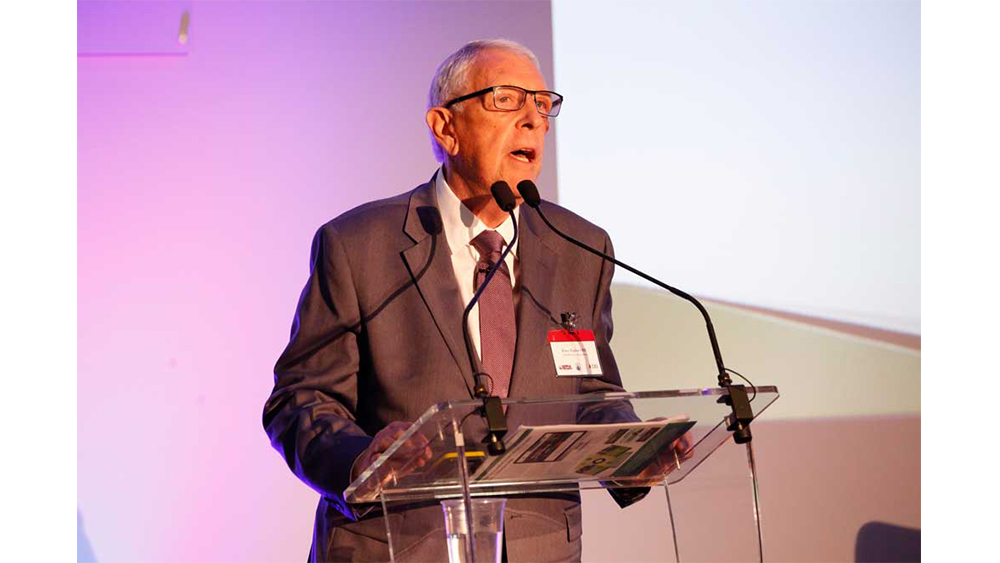
Adam Moffatt, Executive Director of the Ontario Tire Dealers Association (OTDA) and a 20-year veteran tyre recycler, joins The Tyre Recycling Podcast for Episode 95. Adam sits down with Ewan Scott to uncover the severe operational challenges facing tyre dealers, haulers, and processors in Ontario following the provincial government’s decision to downgrade tyre collection and recycling targets under its Individual Producer Responsibility (IPR) framework. He explains the mechanics of Ontario’s pre-2025 regulatory regime—where Producer Responsibility Organisations (PROs) were mandated by the Resource Productivity and Recovery Authority (RPRA) to collect 85% of tyres by weight and recycle 85% of that collected volume—and reveals how producer lobbying led the Ministry of the Environment, Conservation and Parks (MECP) to slash those obligations to a single 65% management target while cutting required collection sites from over 8,000 down to just 4,300.
Stranded Tyres & Quota Cuts: Adam Moffatt on Ontario’s IPR Regulatory Turmoil
Adam Moffatt covers all this and more in Episode 95. So please join us as we learn all about the regulatory turmoil and recovery efforts shaping Ontario’s tyre recycling sector.
Chapters:
0:00 Introduction to Episode #95 with Adam Moffatt
1:31 Canada’s EPR Regimes and Ontario’s Individual Producer Responsibility (IPR) Model
3:13 Pre-2025 Regulations: The 85% Collection and 85% Recycling Targets Explained
4:33 Producer Lobbying and the January 2025 MECP Regulatory Downgrade
5:44 Combining Targets to 65% and Slashing Collection Sites to 4,300
7:31 Mid-Year Quota Shutoffs: Plant Closures and 2 Million Stranded Tyres
9:18 2026 Fallout: Hauler Layoffs and Windsor Processors Importing US Scrap Tyres
11:24 Why Only Tyre Producers Benefited from the Quota Reductions
13:05 Halving Collection Points and Dealer Transport Challenges in Brantford
14:18 Unregistered Collection Sites and RPRA’s Three Disposal Options
16:51 Illegal Dumping Risks, Stockpiling, and Double-Charging Consumers
18:15 The OTS Era vs Today: 50% Processing Capacity Lost
21:06 The September 2026 Reset: 80% Target, 6,500 Sites, and Removing the $1M Fine Cap
22:31 Ontario’s Crumb Rubber Oversupply and Restrictions on TDF and TDA
23:59 Evaluating the 80% Target: Clearing the Backlog vs Long-Term Viability
25:23 Flaws in the Three-Year Rolling Average: COVID Lockdowns vs Current Import Realities
26:39 Why Hitting Compliance Demands 92–94% Pick-Up and Outlook to 2028
28:03 Conclusion to Episode #95 with Adam Moffatt