The Leading Journal for the Tyre Recycling Sector

The Leading Journal for the Tyre Recycling Sector

Home Blog Page 211

Germany has Waste Tyre Issue

Despite protests from the German tyre trade that there is no waste tyre issue in Germany, the news reports on environmental crime suggest otherwise.

In one week in March Tyre and Rubber Recycling picked, without any trouble, four news items about illegal tyre dumping in Germany. The volumes may be low, but the frequency is high.

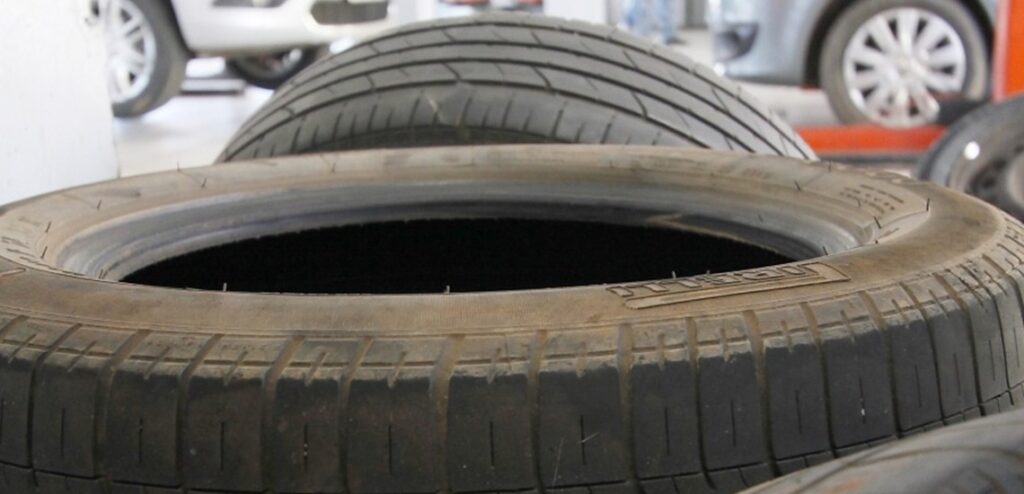
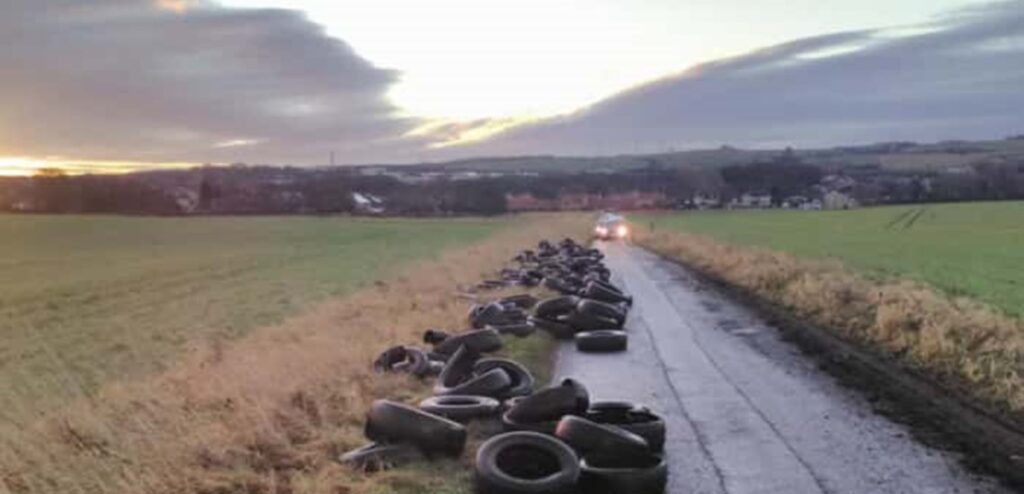
In November 2017, for example, a large number of used tyres were dumped in the Hillscheid district on the dirt road. This was repeated at the same place on Tuesday, March 6th. In the current case, there were about 50 used tyres. In addition, recently in the Ebernhahn district another 50 used tyres were disposed of illegally. The volumes suggest that these tyres arise from the commercial sector.

In Morstad, walkers alerted the authorities to tyres dumped in the Reifental district near the Wormser Landfill.

On or around the night of 05. to 06. In March 2018 about 50 used tyres were illegally disposed of on a dirt road near Ochtendung-Plaidt. The tyres, which are primarily car tyres, were deposited on a dirt road at the landfill “Eiterköpfe”.
In the town of Trassem another 20 old tyres were dumped at the premises of a local construction company.

This represents reports over just seven days, and only those reported in the media. This pattern is repeated on a regular basis across Germany. No part of the country seems immune to this ongoing low-level tyre dumping.

The Tyre Recycling seminars at “The Tire” in Cologne, will include a seminar from Germany’s new tyre recycling association, ZARE, where there is sure to be some discussion about why there is this problem and how the german industry can deal with it.

Manufacturing and Engineering Expertise Keeps A1 Rubber One Step Ahead

A1 Rubber is continuing to reap the rewards of its manufacturing expertise by developing niche products for the Australian flooring market. In an interview with Tyre & Rubber Recycling magazine, CEO John Randel took us through the company’s recent advances and its secrets for staying at the front of its field.

A1 Rubber started manufacturing recycled rubber products back in 1993, when John Randel widened the company’s wire works operations. This expansion saw the company begin the manufacturing of recycled rubber basket liners. In 1997, A1 Rubber began manufacturing products from crumb rubber using buffings and old tyres.

After realising the potential for products using recycled rubber, A1 was perfectly placed to take multiple steps forward, before disaster struck at the break of the new millennium when a devastating fire roared and seared A1’s installations. The facilities may have been destroyed, but Randel’s resolve was not. In 2001 he took the plunge into the deep end of the manufacturing pool and restarted A1 Rubber with a specific focus on ‘Upcycling’.

Seventeen years later, A1 Rubber boasts 8,000 square metres of buildings and four acres of land in Brisbane as well as warehousing in Sydney. Nowadays, the company employs 65 people and upcycles 1000 tonnes of crumbs into finished goods per month.

Interesting note is that all of A1 Rubber’s machinery is built or designed in house. This machinery means that the company can manufacture 1,000 tiles in an 8-hour shift. In our visit to A1 Rubber, John Randel explained; “In Australia, it’s incredibly troublesome to find machinery, and if you are mechanically minded you have to build it yourself. This has resulted in us building and designing our own machinery, and if we do outsource, we design it and get others to build it.” We pressed further on the key benefits that this approach brings, and Randel was happy to delve deeper into this crucial element of the operation. “Unique machinery allows us to produce unique finished goods. Unique finished goods are a competitive edge in themselves, but making use of this unique machinery allows A1 Rubber to benefit from a unique barrier to entry.”

Today, A1 Rubber produces flooring products from recycled rubber for several applications. All products are sold in Australia, with the company currently carrying out a lot of manufacturing for retail chains. During our meeting with John Randel, we were given the lowdown on the company’s flooring portfolio, starting with the recreational surfacing predominately used in playgrounds. The company’s shockpad underlays guarantee thickness and density, whilst performing to all the necessary standards. Randel expands, “It’s the first shockpad that can accommodate a wet-pour rubber surface over it.” A1 also manufactures world-leading wet-pour mixers. These wet-pour mixers are self-cleaning and designed specifically for wet-pour rubber.

Four years ago, in the commercial and gym flooring products sector, A1 Rubber succeeded in transforming its overall quality image by developing the world’s first non-porous recycled rubber flooring. Aimed at gyms and schools, this non-porous rubber flooring is capable of holding 30 PSI pressure, having similar characteristics to vinyl which Randel describes as “game-changing” for recycled rubber flooring. Once again, boosting quality and pioneering these niche offerings has only been possible due to the irreplaceable machinery at the Australian manufacturer’s disposal.

The final product range that John Randel was keen to highlight was A1’s hardware and retail offering. This covers home gym and playground tiles, shed and garage flooring and anti-fatigue matting. In this sector, A1 sees good opportunities for exporting to Europe amongst other markets. Says Randel; “although our unique machinery has given us a distinct competitive advantage, a big disadvantage for us in Australia has been the Australian Dollar. However, with a weakening dollar, there may be an opportunity for us to export in the future.”

A case in point to support Randel’s assertions can be seen through the fact that A1 Rubber recently shipped 21 containers to the UK, highlighting the scope for hardware and domestic products in Europe. “We are already shipping these products to Europe, Asia and New Zealand, whilst trying to get a little bit into the USA. We are constantly looking to develop our export business with hardware and safety matting distributors,” he added. When questioned about what types of markets and partners the company was looking to work with, Randel answered, “we are currently focusing on retail outlets in Western countries.” In relation to exporting other flooring options to Europe, Randel explained that it is complex in trying to compete with underlays for sports fields in Europe, as countries such as Germany are so dominant.

A large element of A1 Rubber’s concept is the idea of “upcycling”. We wanted to know more, and Randel was happy to explain. Back in 2000, A1 Rubber used to manufacture crumb rubber, before Randel realised that there was no money in it. “Recycling tyres is a capital-intensive process and with it being a ´dirty game´, it requires government support to be profitable. With better investments to be made, it meant that going into recycling made no sense to us.”

Where there is money, he stated, is in the upcycling of crumb rubber into finished goods. Today, A1 Rubber is the largest buyer of recycled rubber in Australia. ‘Upcycling’ is the value adding process whereby the products are processed into finished goods, with all waste being manufactured into acoustic underlay by the firm.

On the company’s green credentials, John Randel had some thought-provoking comments. He said, “we don’t see any value in marketing ourselves as a green company. We find that the best way to sell our products is purely on the products meeting the quality and fitness for purpose. In our experience, the green concept is a marginal USP. The good feeling of recycling only happens following the production and sale of any goods.” So they don’t see any advantage in green marketing principles? Not quite. “If we gain advantages from green credentials then so be it, but we are producing niche products that clients want and are a great back end to tyre recyclers around the world.”

A1 Rubber continues key investments in technology and machinery. As we’ve already seen, the company’s technological know-how and acquired knowledge has given it a competitive edge, so it’s no surprise that Randel sees this as a constant source of innovation. The most recent development has come in the form of a new high-speed dispersion mixer which makes non-porous commercial rubber flooring. The new machinery will have double the capacity of its current model. Furthermore, two years ago, the firm invested 1 million dollars in a machine to cut tiles, which pumps 1,000 square metres of tiles in one 8-hour shift. Randal says, “these developments should aid the expansion of our hardware range, as we have been finding limitations in what we can do.”

In terms of contracts, a big win for A1 in recent times was their agreement with Bridgestone Australia. The agreement saw A1 Rubber supply Bridgestone Australia with industrial rubber products from the crumb rubber in their retread plants, meaning that the tyre manufacturer is installing floors derived from their own recycled materials.

At this moment in time, A1 Rubber does not have any plans to expand its manufacturing facilities to locations outside of Australia. However, in a forthright exchange, John Randel admitted that they were “interested in partnering with like-minded companies that can use their manufacturing expertise”.

Regarding the future, a key component of A1’s strategy, according to Randel, will be “managing costs in line with income.” This may seem like a somewhat candid response to the future, but it’s all for a good reason. Living in today’s turbulent political climate, Randel feels that the next 3-5 years could be very challenging economically. He explains; “We have a very profitable business with sufficient reserves, meaning we could survive the gravest economic downturn. We are capitalists by nature, but no one knows what the future holds, and with the current political climate, it comes down to the survival of the fittest.” A possible economic downturn would not be the worst outcome in the world, though, according to Randel. “In times of economic strife, governments spend money on schools and sports for kids. With our offerings, we are in a perfect position to provide products for playgrounds and sports surfaces should government stimulate those areas. This is because rubber fits into a government model of sports and play.”

Environment Agency Believes Exemptions to Change

At the Tyre Recycling Association’s Forum at The Belfry on 7th March, Howard Leberman, from the UK’s Environment Agency made it clear that the current Exemptions system was due to be changed. The changes were awaiting Ministerial signing off before being finalised.

Leberman said that the changes would be such that whilst not completely removing Exemptions, would put most operators in the situation where they would have to move to Permitted operations.

The changes would look at raising the bar in a number of areas and reducing the volumes at Exempt sites, essentially either moving operators into Permitted operations or making the remaining sites economically unviable. Those remaining Exempt sites would therefore become suspect and would be the target of more field officer investigations.

At the same event, Gary Walker, from the Scottish Environment Agency highlighted the impact of the Scottish ban on Exemptions for tyre operators. He told the audience that whilst SEPA had expected to see a rise in Permitted sites, the reality was that Scotland has only three Permitted sites and none of the Exempt sites moved into Permitting. They were essentially closed down in one fell swoop. Illegal tyre dumping and breaches of Permits have reduced – though there is the remaining issue of organised serious crime resulting in tyre stockpiles still arising – but these stockpiles are now clearly the result of organised criminal operations.

Scandinavian Enviro Systems Signs an MoU with a Canadian Partner

Scandinavian Enviro Systems AB (Enviro) has signed an MoU with ArticCan Energy Services Inc, an energy services provider from Canada.

The MoU is a first step in establishing a new plant in Canada. The agreement is valid for a period of 18 months and applies to a recycling plant of 30,000 tonnes of end of life tyres per year.

ArticCan has been in operation for over 10 years. They provide services to the Oil & Gas industry, and have expanded their operations to include the provision of energy efficiency, environmental and sustainability services.

Canada is a very important market for us. Several leading tyre manufacturers are established in the region and there is also a high presence of other rubber producers as well”, says Thomas Sörensson, CEO of Enviro.

“The signing of the MoU with Enviro represents a significant milestone in our strategic vision of finding a sustainable solution that allows recovery of valuable materials from end of life tyres”, says Dr. Anastassia Manuilova, VP, Energy and Environment of ArticCan.

Northern Ireland Tyre Dumping on the Increase

The number of tyre dumping incidents in Northern Ireland rose significantly in 2017 from the previous year.

According to BBC News NI, 155 incidents were reported to the Department of Agriculture, Environment and Rural Affairs (DAERA). Tyre dumping was reported 95 times in 2016 leading to just four prosecutions.

The department said that the illegal dumping of tyres was usually carried out by commercial operators keen to avoid disposal costs.

There are currently five open investigations into reported deposits.

There were six prosecutions in 2015 but the total number of incidents in that year is not available. While no particular illegal tyre dumping problem areas have been identified, “bonfire locations do feature as hotspots,” DAERA said. However, only 14 per cent of illegal tyre dumping happens at bonfire sites.

The council area with the most tyre dumping was Armagh, Banbridge and Craigavon, with 17 per cent of all reported incidents.

It is followed by Mid Ulster, with 13 per cent of reported incidents and Antrim and Newtownabbey with 12 per cent  of reported incidents.

A total of 30 per cent of tyres dumped are simply left at the side of the road, 23 per cent are left on farmland, with 12 per cent left at commercial premises.

Kentucky Division of Waste Management Seeks Applications for Tyre-derived Products Grants

The Kentucky Energy and Environment Cabinet are seeking grant proposals for projects that promote the use of recycled waste tyres. This grant has focused on funding crumb rubber mulch for landscaping projects in recent years, but the cabinet is encouraging applicants to expand the scope of potential projects for this grant cycle.

In addition to landscaping mulch projects, the cabinet is seeking requests for walking trails, pour-in-place playgrounds, sidewalks or other surfaces, horse trailer or stall mats, tree wells or other products utilizing recycled Kentucky tyres.

Projects that are not eligible for grant funding include athletic field or loose crumb rubber playground applications, tyre-derived aggregate, tyre-derived fuel, rubber-modified asphalt or civil engineering projects.

“This grant program is beneficial to the grantees and the communities they serve, while also helping the entire commonwealth by promoting the use of recycled tyres that may otherwise be dumped or improperly managed,” said Energy and Environment Secretary Charles Snavely. “We know there are many effective uses for this material and we would like to encourage applicants to research and apply for innovative projects utilizing recycled tyres.”

Gemini Corporation Looks to Expand Contact Base

Gemini Corporation N.V. is engaged in the worldwide business of diversified scrap product lines and claims a position as the world’s leading organisation in the trading of recyclable materials including rubber, steel, wood, plastics and oleo chemicals. The company, which has a turnover of $520m and exports over 1 million metric tons per annum, says it is also the largest scrap tyre trader in the world with a 40% market share.

The Rubber business achievements highlights for the year ending December 2017 include the following:

– Largest scrap tyre exporter in the world.

– Secured UK Waste Broker License.

– Doubling the volume year over year for last 3 years.

2015      –              57304 tons

2016       –              112840 tons

2017      –              241072 tons

– Business across 26 Countries in the world.

– Working with almost all the shipping lines in the world.

– Stricter adherence to applicable laws and compliance with trustworthy operations.

– Stepped into the 6th year of Rubber Business with a new benchmark of 25000 (40 HC) Containers.

– Exporting from countries like UK, Ireland Australia, New Zealand, US and most of Europe

– Largest exporter from UK/Ireland with volume of 1000 TEU’s/month

Gemini Corporation manages a growing recycling business around the UK, USA, Australia, New Zealand and Europe and is currently looking forward to widening its protracted network of buyers and suppliers of recycled and recyclable rubber on global basis.

The company says it is looking for potential buyers of recyclable/renewable rubber products and thereby supports the suppliers in removing the scrap together with an assurance of an eco-friendly recycling process in the form of a recovery report. The company is self-sufficient in acting as an end to end connecting bridge starting from the supplier’s origin to the buyer’s destination. Gemini adheres to all regional regulatory compliance and applicable law of the land.

The Rubber Business Unit of the company deals with various kinds of recyclable rubber products, which includes baled tyres, shredded tyres, rubber powder, granulates (crumb rubber) butyl tubes and buffings.

Please visit www.geminicorp.be for more information about Gemini Corporation NV or email energy@geminicorp.be

GDT Look to Establish New Queensland Plant and Foreign Partnerships

In an interview with the Chief Operating Officer of GDT (Green Distillation Technologies), Trevor Bayley, it was announced that GDT are in the process of establishing ground for a new plant in Queensland, as well as looking towards future development incorporating a 50/50 model with foreign partners around the world.

Trevor Bayley grew up in the West Country of the United Kingdom, before migrating to Australia at the age of 21, where he worked in the aviation industry for 17 years with airlines such as Air France, TAA, UTA and Cathay, where he was the assistant airport manager and cargo sales manager.

Following this, his travels took him to Japan to live for 15 years, where he worked principally in the automotive industry generating sales between Japanese engineering companies and Western customers. As a part of this work, he learnt Japanese and in his spare time founded the Japanese Cricket Association. Seven more years in China and a life on the road eventually became tiring for Bayley, and he finally returned to Melbourne with his family in 2007.

Around this time, Bayley started to have a look at the GDT project, but concedes he “didn’t get on very well with his team at the first meeting.” Subsequently, however, through hard work, a successful relationship was built with his team, and GDT was established in 2010.

According to Bayley, the approach from the embryonic stages of GDT has always been focused on a preference for spending money on the actual job rather than investing in something theoretical. Bayley explains; “it’s better to start with a practical base and build theory around that.”

Following this, GDT began to scale up with a bigger unit purchased to process more tyres thanks to the funding that Chief Executive Officer Craig Dunn managed to secure through his contacts in the Rugby Union field. GDT then moved to go public appointing an Independent Chairman in the form of John Fletcher. Fletcher’s name may seem familiar to readers as he was the former CEO of Brambles Industries and Coles Myer, but following his advice, the company opted to move against the idea of a public listing to “protect their shareholders.”

Bayley expands; “this move was actually too early in hindsight, as we didn’t have the correct balance on the board. Today, we have 400 shareholders, who are based in the UK, Isle of Man, Japan, New Zealand, Singapore, etc. It doesn’t mean we won’t go public in the future, but until now we remain an unlisted public company.”

During our interview, Bayley moved onto to a discussion surrounding the key aims of GDT, and began by speaking about the problem at hand. “Tyre usage around the world is growing, with new plants shooting up all the time.

It’s just staggering really, and the tyre manufacturers are not looking beyond the end of the tyre’s first life. Therefore, Green Distillation Technologies has recycling at its core by producing two new products, that convert tyres into fuel.”

We realise that we aren’t going to save the world, but we will make a difference by establishing a solution to a global problem by adding value to a waste stream that has nowhere to go.”

Bayley also had some interesting comments about other energy sources and uses of out of use tyres. Regarding tyres specifically, we should be encouraging the use of crumb rubber in roads, but for some reason we aren´t.”

What products do GDT produce today? “At this point in time the company produces different products. The tyres are processed whole, being subjected to a comparatively low heat, in advance of extraction as a vapour.

“Essentially GDT derives its income from the weight of the materials we produce from the tyre. Oil is bought by weight as specific gravity determines the volume. In that sense our whole business is a weight based business, we charge for the tyres by weight, we sell the oil, carbon and steel by weight,” he said.

In cold hard figures, one cycle of up to 500 kg of tyres can take approximately 55 minutes. Each plant processes 19,000 tonnes of tyres per year and delivers in the region of 7.3 million litres of oil.

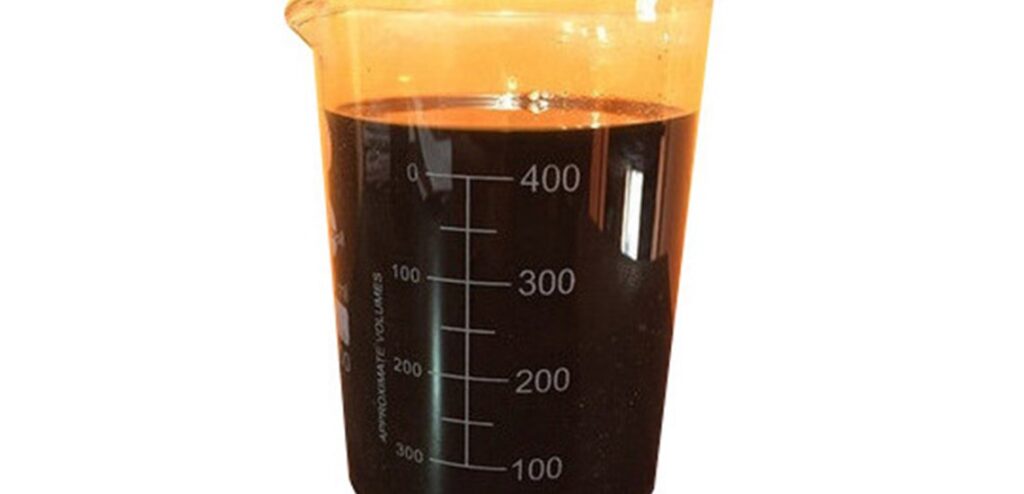
Bayley expanded more on GDT’s products, “Our oil is very stable as a product. However, we have to suffer the ambiguity of being defined as the same product as pyrolysis oil. We have proven that GDTC oil can be blended with diesel or further refined. Our oil is a revenue generator, whereas pyrolysis oil is a waste that is difficult to sell.”

GDT’s head office is located in Melbourne where seven people are currently employed. The corporation also has an operating facility in Warren in New South Wales. This site processes and tests the tyres on a commissioning basis, where 10 people including Chief Technical Officer Denis Randall currently work. Randall, who has three degrees and a PHD, is an inventor of waste to energy and renewable energy technologies and was the brains behind GDT’s Destructive Distillation technology, which produces three sellable products in the form of oil, steel and carbon.

It is a closed process that only produces heat as a waste stream. Bayley adds, “It is a clean process that works for any waste product. It causes a chemical reaction in the components of the tyre and as I mentioned, the only waste stream is heat, but we are currently investigating how we can convert that heat into energy too.”

As for future plans, Bayley revealed that plans are afoot to establish a new plant in Queensland.

The Queensland Government is all fired up and are very aggressive in their environment policies.

Although we are in the early stages still, we have found a location in Toowoomba and it fits the bill in terms of capacity,” clarified Bayley.

The new ground is a joint venture with one of Australia’s prevalent suppliers for out of gauge mining tyres, with all the mining tyres staying on site to be processed, offering a saving for the customer.

Notwithstanding legal hurdles and the paperwork that needs to be completed, Bayley told Tyre & Rubber Recycling that they were about 16 to 18 months out from full production.

GDT build the module and will have approximately 18 people working on it as it runs 24-7 over 329 to 350 days a year.”

Regarding plans further afield and their international approach, Bayley highlighted how GDT was looking at a 50/50 investment concept.

“There is no money in licensing, but there is money in doing the job well. We are considering a 50/50 concept abroad where we can provide our engineering expertise and training for personnel etc and the partner delivers the land, permits, day to day operations and is generally responsible for local management.

From permit to being fully operational we are looking at a 16-month turnaround,” he said. Funding? Bayley added that this was an “open book” and that they would work according to whatever the local requirements are.

Bayley expands; “in reality, we are looking at any type of partner, but mostly one that can do the job. We regularly receive approaches from people in finance but can they process a tyre? Individuals from the tyre, waste and mining industry would be a much better match.”

On markets, Bayley says, “We are open to offers from any market. We have had enquiries from people in the UK, India and Thailand and get an enquiry every day from US Middle Men. Further down the line, it may be an idea to find our own CEO to establish us over there.”

Finally, Bayley sat down to tell us their view point on the tyre recycling industry. “We are not interested in controlling the market. We see it as being much more beneficial to work together as an industry.

In Australia particularly, there is plenty of feedstock to go around. I’ll reiterate that this is a global problem that must be solved.”

Bayley, however, did have stern words for the tyre industry and its manufacturers.

“The tyre industry needs to talk to the recycler and must up its game in general. It’s not only about saving road lives. In short the tyre industry and recycling industry must work together.”

Tyre Plant for Tasmania?

Tasmanian entrepreneur Tim Chugg, who previously traded as Tyre Recycle Tasmania, is coming around for a second attempt at setting up a tyre plant with a new company, aptly entitles Pheonix Rubber. Planning has been submitted to the City of Launceston.

Mr Chugg hopes to establish a facility to apply a “sustainable” approach to disposing of end-of-life tyres by converting them into a resource which could be re-purposed.

The facility would fix the state’s tyre issues

“We’re confident we’ll be the first one (state) in Australia to fully control our scrap tyre problems,” Chugg said.

“We think that is very exciting. Not only for the tyre industry but for the state as a whole as far as sorting out a large environmental issue.”

The proposal would allow tyres to be shredded and crumbed, and a moulding facility to be built. The tyres could be reused in road bases, play equipment, and other civil engineering applications.

The facility is expected to cost about $3.5 million and create 10 jobs.

Tasmanian Conservation Trust’s Peter McGlone says the site is inappropriate because of its proximity to an aged care facility, school and creche.

“The proposed facility at Mowbray should not be permitted by City of Launceston as it is too close to residences and places where vulnerable people are located,” McGlone said.

But, Chugg claimed that the proposed site was “the perfect location”.

“The site is surrounded by a sawmill, road resurfacing plant and a waste management centre,” he said.

“The facility is a closed-loop circuit and there are no omissions from the plant, so I’m not sure what they’re concerned about.”

Mexican City Faces Tyre Challenge

The Mexican city of Reynosa, sitting on the Mexico-USA, border has recognised that tyres are a problem. In November 2017 the city authorities launched a tyre collection campaign that has so far collected 23,000 scrap tyres from the streets and alleyways of the city.

However, the city’s tyre workshops continue to dump tyres and place them on the streets for sale to anyone who wants them.

The State and City have made arrangements for the disposal of waste tyres at Recycling Center in the Balcones de Alcalá Fraccionamiento but still the problem of tyre dumping persists.

Some reports suggest that the tyres are coming from across the border in the USA, quoting collectors in Cameron and Edinburg, Texas, in particular.

The recycled tyres from Reynosa are used to produce a special polymer that is used in the application of asphalt binder.